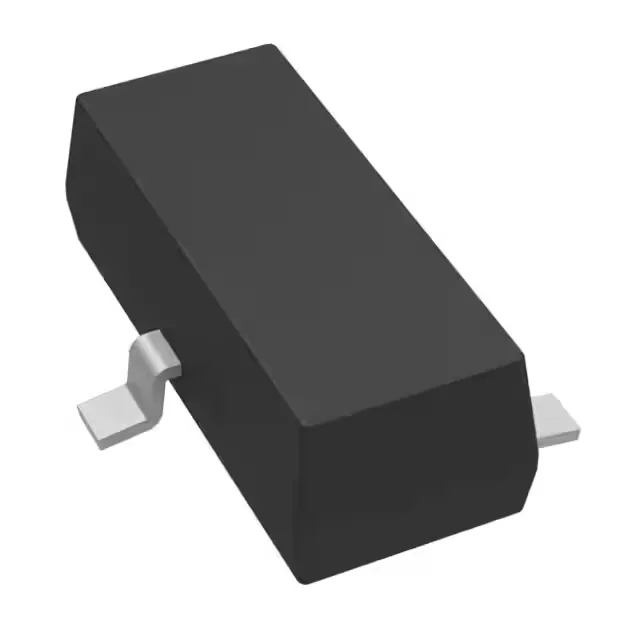
2.048 V shunt reference — BOM-fit check
It is designed for applications requiring a stable voltage reference — ADC reference, comparator threshold, or DAC span — where the shunt topology (two-terminal, like a Zener) simplifies the bias network to one series resistor from the supply rail. The 2.048 V level is a common choice for 12-bit and 16-bit ADCs with a 4.096 V full-scale input, where the reference is half the span. The ±1% grade covers most general-purpose accuracy needs; if the system error budget demands tighter than 20 mV absolute at room temperature, step up to the A-grade (±0.1%) variant in the same LM4040 family.
Temperature drift and noise — what they cost the system
The temperature coefficient is 150 ppm/°C. For a 12-bit ADC with a 4.096 V reference, that's roughly 4.6 LSBs of drift — acceptable for industrial monitoring but marginal for precision weigh-scale or strain-gauge chains. The 35 µVrms noise in the 10 Hz to 10 kHz band sets the noise floor for low-frequency measurements; a simple RC filter at the reference output knocks down the wideband component if the ADC conversion rate allows settling time.
Bias current and output drive
As a shunt reference, the LM4040D20IDBZTG4 requires a minimum cathode current of 80 µA to maintain regulation. The series resistor from the supply must be sized to deliver at least this current plus the load current at the minimum supply voltage. Maximum output current is 15 mA — adequate for driving a single ADC reference input or a comparator threshold divider, but not for powering external circuitry. The SOT-23-3 package handles the dissipation comfortably at these current levels.
For dual-source resilience, the LM4040 family includes multiple tolerance grades and output voltages sharing the same SOT-23-3 footprint.