5 V shunt reference with ±0.5% initial accuracy
The shunt topology means it regulates by shunting current through the cathode — it behaves like a Zener but with much tighter temperature stability and lower noise.
Noise floor and output drive
This noise couples directly into the reference input of an ADC or the non-inverting node of an op-amp, so a 100 nF bypass cap at the output pin is standard practice. The maximum cathode current is 15 mA, which limits how many loads you can hang off the reference before it drops out of regulation. For a single ADC reference input drawing 1–2 mA, there is plenty of headroom; driving multiple converter channels or a resistive divider network will consume that budget quickly.
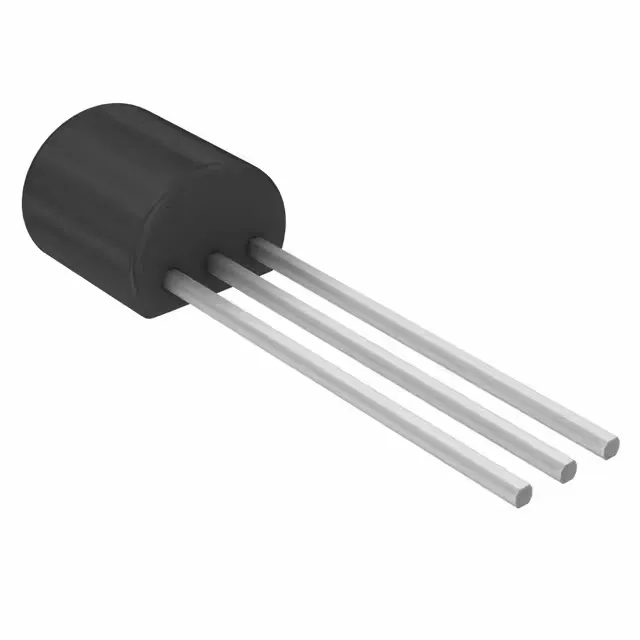
TO-92-3 package and through-hole mounting
The part comes in a TO-92-3 through-hole package. This is the classic three-lead transistor outline — hand-solderable, breadboard-friendly, and common in low-volume production.