2.5 V fixed shunt — what it is and why it's specced
It uses a shunt (two-terminal) topology, meaning it behaves like a low-impedance Zener diode — you bias it with a series resistor from the positive supply, and it sinks enough cathode current to regulate the output. The fixed 2.5 V rail is the most common reference voltage for 12-bit and 16-bit SAR ADCs, comparator thresholds, and DAC reference inputs in industrial and automotive signal chains. The ±0.5% initial tolerance and 100 ppm/°C temperature coefficient place it in the mid-precision tier — tight enough for a 12-bit system without external trimming, but not the ±0.1% / 20 ppm grade needed for 16-bit-plus metrology.
Shunt topology — the resistor matters as much as the reference
Because this is a shunt reference, the BOM must include a series resistor from the supply rail to the reference cathode. The resistor value sets the bias current: it must supply the maximum cathode current (80 µA quiescent, plus any load current drawn from the reference pin) while keeping the shunt in regulation across the full supply range. At 15 mA maximum output current, the resistor power dissipation can become significant if the supply voltage is high — a 24 V rail dropping to 2.5 V through the resistor dissipates over 300 mW at full load, so pick a resistor rated for at least 0.5 W. The 35 µVrms noise spec over 10 Hz to 10 kHz is typical for a shunt reference at this current level — it's quiet enough for a 12-bit ADC but may need a bypass cap for a 16-bit sigma-delta converter. A 0.1 µF ceramic from cathode to ground knocks down the wideband noise without affecting DC accuracy.
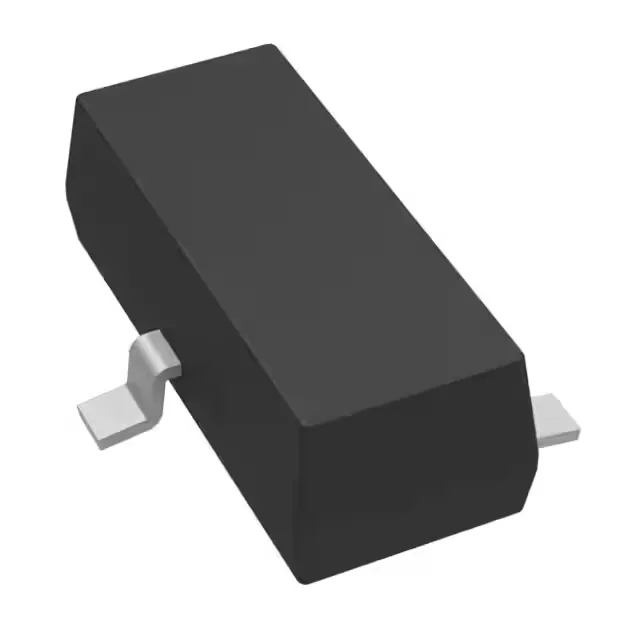
SOT-23-3 — rework-friendly, but watch the pad
The SOT-23-3 package is one of the easiest small-outline parts to hand-rework. The three pads are well-spaced, the body is small enough that hot air reaches all joints quickly, and there's no thermal pad underneath to steal heat. A standard 260°C reflow profile with a 30-second soak above 217°C works fine; the small thermal mass means it reaches temperature fast, so don't overshoot or you'll lift the pad.
TI has not issued a last-time-buy notice or a product discontinuation for this part. It remains in the current catalog, and there is no official successor to track.