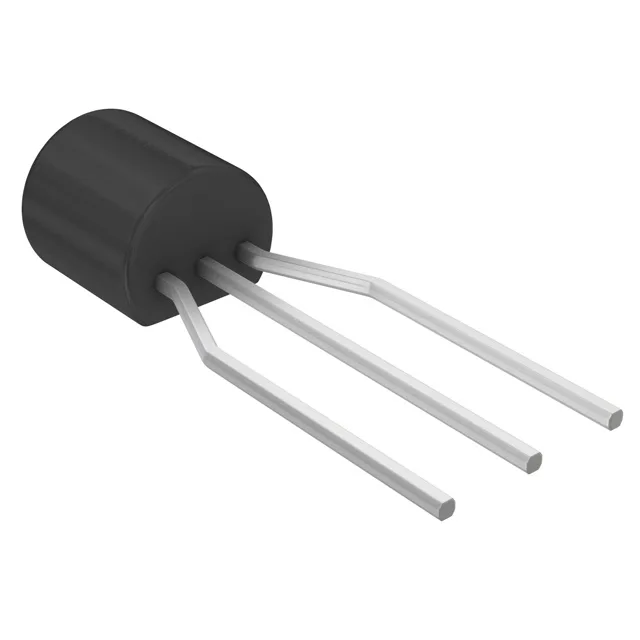
The Texas Instruments LM4040C20ILPR is a precision shunt voltage reference delivering a fixed 2.048 V output with ±0.5% initial tolerance. Typical applications include ADC reference biasing, comparator threshold setting, and precision current-loop supplies where a stable, low-noise rail is needed. The 2.048 V output is a common reference for 12-bit and 16-bit ADCs with a 4.096 V full-scale range — the math works out cleanly: 1 LSB = 1 mV for a 12-bit converter. The ±0.5% tolerance means the actual output can vary from 2.037 V to 2.059 V at 25°C, which is tight enough for most 8-bit to 10-bit systems but may need trimming for higher-resolution designs. Temperature drift is specified at 100 ppm/°C, which translates to roughly 0.2 mV change per degree C. Over the full -40°C to 85°C range the reference can shift up to ±12.8 mV from the 25°C value — something to budget in the error stack if the board sees wide thermal swings. The shunt architecture requires an external series resistor to set the bias current; the device draws a minimum cathode current of 80 µA and can sink up to 15 mA.
The through-hole TO-92-3 package is widely stocked across distribution channels.