2.048V fixed shunt reference — the bench standard
That 2.048V is a convenient value for biasing ADCs with a 2.048V full-scale input or setting a comparator threshold right at the midpoint of a 0–4.096V signal chain. It's a shunt-type reference, meaning it operates like a precision Zener diode — it regulates the voltage by shunting current through the cathode to ground. The minimum cathode current is 80 µA, and it can sink up to 15 mA of output current, so it handles a modest load without a separate supply rail.
The ±0.5% initial tolerance means a fresh part out of the tube will read between 2.037V and 2.059V at 25°C. That's tight enough for a 12-bit system where 1 LSB at 2.048V is 500 µV — the reference error is under 10 LSBs before any drift. Noise is specified at 35 µVrms over 10 Hz to 10 kHz — that's the wideband noise floor. In a low-frequency measurement loop the noise integrates to a few microvolts, but a 10 nF bypass cap across the output pins knocks the peak-to-peak noise down noticeably.
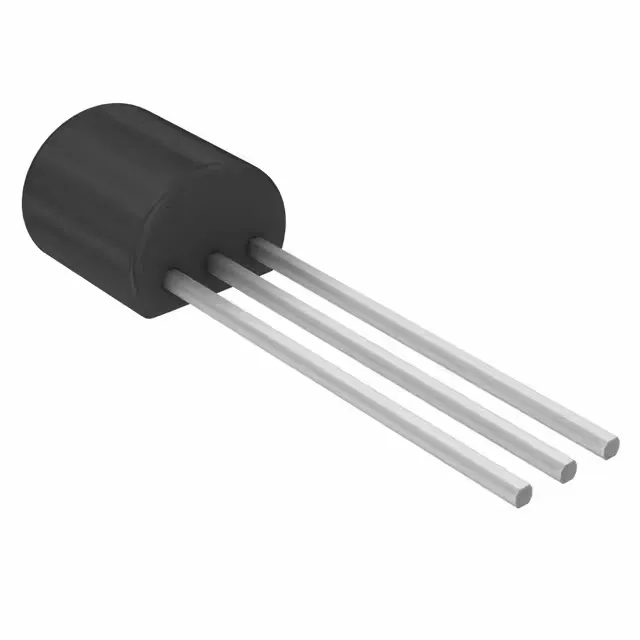
TO-92-3 package — through-hole for repair and prototype
The LM4040C20ILPE3 comes in a TO-92-3 through-hole package (TO-226-3, TO-92-3).
Sourcing and lifecycle — active and available
That means no last-time-buy pressure for new designs or replacement orders.