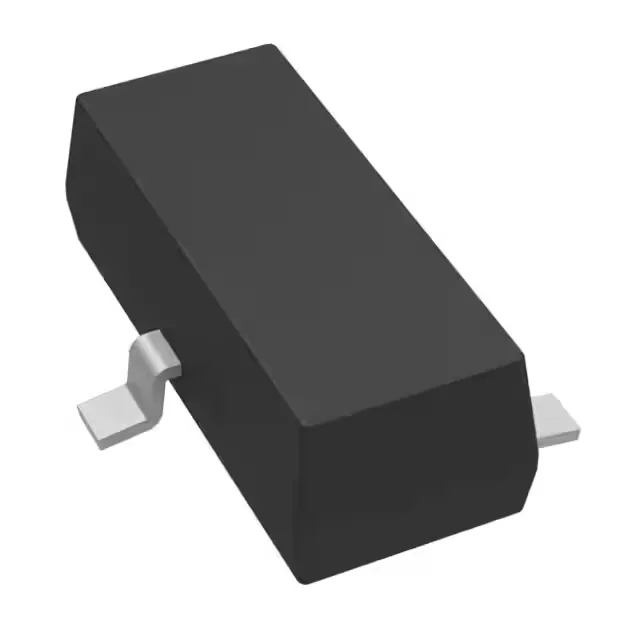
The LM4040BIM3-2.0 is a precision shunt voltage reference from Texas Instruments' LM4040 family, delivering a fixed 2.048V output with ±0.2% initial tolerance. This is the voltage a 12-bit ADC with a 2.048V reference input sees as its full-scale — every millivolt of error at the reference directly shifts the conversion result by about half an LSB. As a shunt reference, it behaves like a precision Zener diode: it regulates the output voltage by shunting current through the cathode to ground, requiring a series resistor from the supply. The minimum cathode current is 65 µA, and the maximum output current is 15 mA — the resistor value must be chosen so the current through the reference stays within this window across load and supply variations.
Temperature drift and noise — the accuracy budget
For a 12-bit system with a 2.048V reference, that drift consumes about 0.1 LSB — acceptable. For a 16-bit system, the same drift eats roughly 1.6 LSBs, so this part is marginal for 16-bit precision without calibration. Wideband noise is specified at 35 µVrms over 10 Hz to 10 kHz. In a slow-sampling ADC (below 100 SPS), this noise can be averaged out; in a fast SAR ADC sampling at 1 MSPS, the noise bandwidth overlaps the conversion window and may degrade the effective resolution by 1–2 bits unless the reference output is filtered.
The SOT-23-3 package (TO-236-3, SC-59 equivalent) is a common footprint shared across the LM4040 family. If your BOM calls for the 'BIM3' grade (B = ±0.2% tolerance, I = industrial temperature, M3 = SOT-23-3), the 'AIM3' grade (A = ±0.1% tolerance) is a drop-in replacement with tighter initial accuracy — but it carries the same obsolete status.