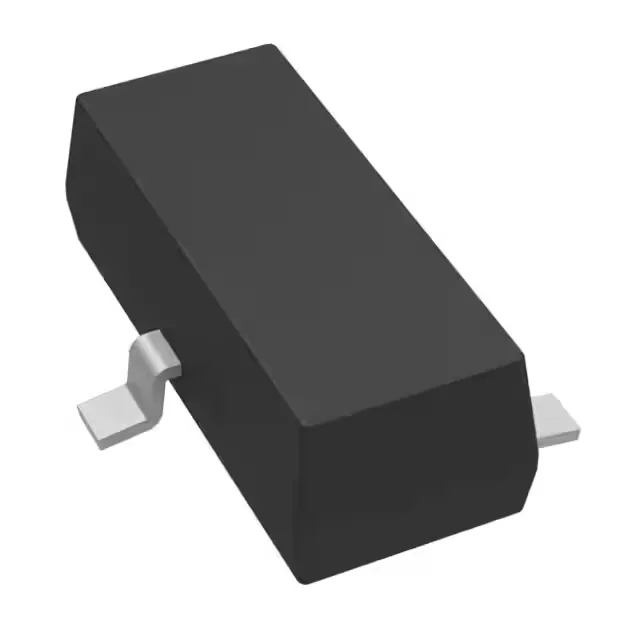
8.192 V shunt reference — what it does for the precision rail
The Texas Instruments LM4040B82IDBZT is a precision shunt voltage reference delivering a fixed 8.192 V output with an initial tolerance of ±0.2%. That 8.192 V level is a common anchor for 12-bit and 14-bit ADC reference inputs, comparator thresholds, and DAC scaling — the value sits just below the 10 V ceiling many industrial signal chains use, giving headroom for the op-amp rails. As a shunt (two-terminal) reference, it behaves like a precision Zener diode: you bias it with a resistor from a higher supply rail, and the device sinks enough cathode current (110 µA typical) to regulate the output. The 15 mA maximum output current limits the load it can drive directly — plan for a buffer if the reference feeds more than a single ADC reference input or a handful of comparators.
The ±0.2% initial tolerance means a fresh part reads between 8.176 V and 8.208 V at 25 °C — tight enough for a 12-bit system where 1 LSB at 8.192 V reference is 2 mV. Noise is specified at 130 µVrms over a 10 Hz to 10 kHz bandwidth — that is about 16 ppm of the 8.192 V output. For a 12-bit ADC with a 2 mV LSB, the noise contribution is roughly 6% of one LSB, which is acceptable for most industrial measurements but worth noting for metrology-grade applications that would reach for a lower-noise bandgap reference.
Sourcing an obsolete part — what to expect
Because this is a shunt reference in a common SOT-23-3 package, the replacement path is not a single pin-compatible drop-in — the LM4040 family spans multiple voltage options and tolerance grades (A, B, C, D, E). If the B-grade ±0.2% tolerance is not critical, a C-grade (±0.5%) or D-grade (±1%) sibling may be easier to source. The 8.192 V output voltage is the binding constraint; changing it shifts the entire ADC reference or comparator threshold.