Fixed 5V shunt — the tolerance grade that matters
That B-grade tolerance is the middle tier in the LM4040 family — tighter than the ±0.5% A-grade but looser than the ±0.1% C-grade. For a 12-bit ADC with a 5V reference, the ±0.2% error eats about 8 LSBs of the full-scale budget; if your system needs better than 10-bit absolute accuracy, you step up to the C-grade.
100 ppm/°C drift — what it means across temperature
The temperature coefficient is 100 ppm/°C, which translates to a 5 mV shift over a 100°C span (say from -40°C to 60°C). That's fine for a 12-bit system where the LSB is 1.22 mV — the drift adds about 4 LSBs of error worst-case. For a 16-bit ADC (76 µV LSB), that same drift swamps the lower bits, so this part fits best in 10- to 12-bit precision loops or as a comparator threshold where absolute voltage matters less than stability.
SC-70-5 footprint and cathode current
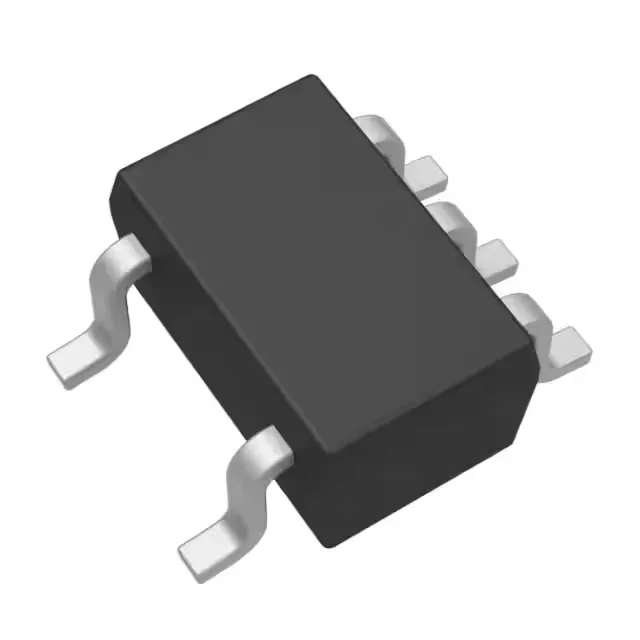
Housed in the SC-70-5 (SOT-353) package, this reference takes minimal board area — about 2.1 mm × 2.0 mm. The shunt architecture needs a cathode current of 95 µA minimum to regulate, and it can sink up to 15 mA. That 95 µA quiescent floor means the series resistor must be sized to deliver at least that current at the lowest input voltage, plus whatever load current the reference drives.
No end-of-life notice, no last-time-buy deadline.