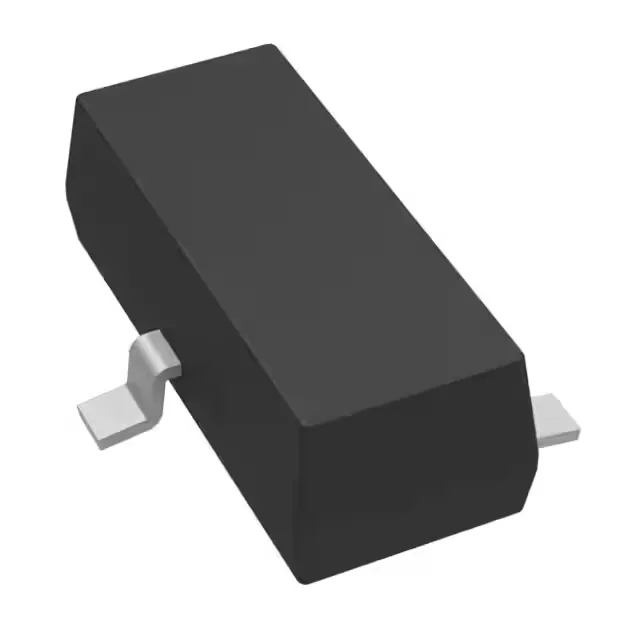
5 V at ±0.1% — the tolerance that decides the BOM
The LM4040AIM3X-5.0/NOPB is a precision 5 V shunt reference from Texas Instruments, part of the LM4040 family. Its defining spec is the ±0.1% initial tolerance — that means a 5 V output is guaranteed within 5 mV at 25 °C, without any external trim. For a 12-bit ADC with a 5 V reference, that 5 mV error consumes about 4 LSBs of the range; for a 16-bit converter it is 65 LSBs. The 100 ppm/°C temperature coefficient adds up to 5 mV of drift over a 100 °C swing, so the total accuracy budget across temperature is about 10 mV worst-case — acceptable for many industrial and instrumentation designs, but worth checking against the system error budget before committing.
Shunt topology — bias resistor and cathode current
As a shunt reference, the LM4040AIM3X-5.0/NOPB behaves like a precision Zener diode: it requires an external series resistor from the supply to the cathode to set the bias current. The minimum cathode current is 80 µA, and the maximum output current is 15 mA. The bias resistor value is chosen so that the current through the reference stays above 80 µA under all load and supply conditions, while keeping the total dissipation within the SOT-23-3 package limits. The 80 µVrms noise spec (10 Hz–10 kHz) is moderate for a shunt reference — expect it to contribute about 0.0016% of full-scale noise in a 5 V system, which is fine for most 12-bit applications but may need a filter for 16-bit or higher.