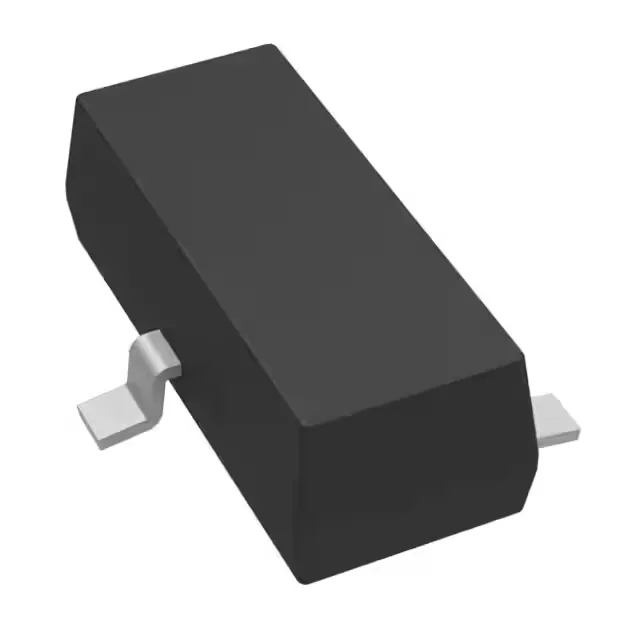
5 V shunt reference at ±0.1% — what it buys the design
The shunt topology means it needs no external capacitor for stability — just a cathode resistor to set the bias current above 95 µA.
Active, no LTB risk — still a standard catalog item
Shunt vs series — the bias current trade-off
Because this is a shunt reference, it behaves like a Zener diode: it needs a cathode resistor to the supply and a minimum cathode current of 95 µA to regulate. That resistor also sets the total current drawn from the rail — the load plus the shunt current. For a battery-powered design drawing microamps, the 95 µA floor may be a consideration; for a 5 V rail with plenty of headroom, it is a non-issue. The series reference LM4132AMF-4.1/NOPB, by contrast, draws only 100 µA quiescent and offers a tighter 20 ppm/°C drift and ±0.05% tolerance, but it is a 4.096 V output in a different package and costs more. The shunt topology here wins on simplicity and board area — no bypass cap, no dropout voltage to budget.