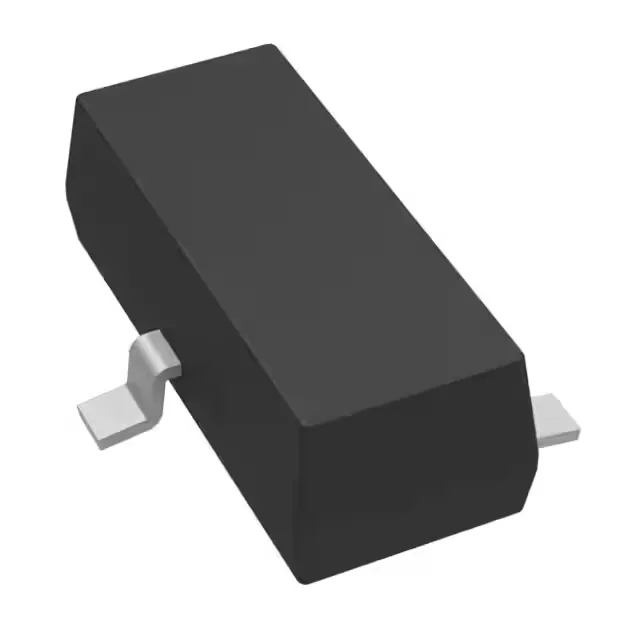
3V shunt reference — what the tolerance and noise mean for your analog rail
The LM4040A30IDBZTG4 is a fixed 3V shunt reference from TI's LM4040 family, specified with ±0.1% initial tolerance and 35 µVrms noise over a 10 Hz to 10 kHz bandwidth. That tolerance places it in the precision tier — good for a 12-bit ADC reference without external trimming, and the noise floor is low enough that it won't dominate the LSB budget in most 12- to 14-bit signal chains. The shunt architecture means it operates like a two-terminal Zener: you bias it through a series resistor from a higher-voltage rail, and the reference draws whatever cathode current it needs to regulate at 3V. Minimum cathode current is 82 µA, maximum output current is 15 mA — the external resistor must be sized to supply both the load and the reference's own quiescent current across the input voltage range.
Temperature drift and operating range
For a 12-bit system with a 3V reference (0.73 mV LSB), that drift consumes about 40% of one LSB — acceptable for most industrial control loops, but worth noting if you're targeting 14-bit or better without calibration. The SOT-23-3 package (TO-236-3 / SC-59 compatible) keeps the board footprint small — about 2.9 mm × 1.3 mm — and the surface-mount assembly is straightforward for standard reflow profiles. No exposed pad, so thermal management is via the PCB copper connected to the cathode pin.