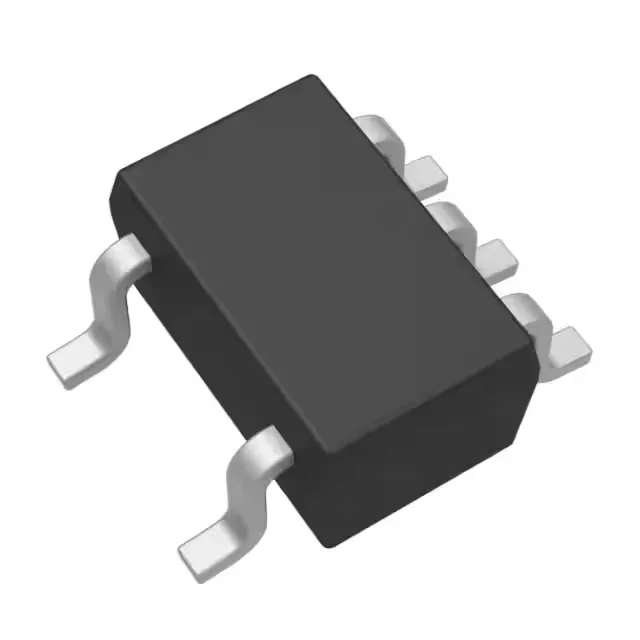
2.048 V shunt reference — the ±0.1% tolerance that locks the ADC scale
The Texas Instruments LM4040A20IDCKR is a precision shunt voltage reference with a fixed 2.048 V output and a ±0.1% initial tolerance. That tolerance grade is the tightest in the LM4040A family — the ±0.5% and ±1% siblings are cheaper but add a systematic gain error that a calibration technician will find on the first board-level verification. For a 12-bit ADC with a 4.096 V reference input, the 2.048 V output sets the full-scale range directly; the ±0.1% tolerance keeps the gain error below 2 mV, which is within the LSB budget for most 12-bit conversions without a trim step.
The 35 µVrms noise over 10 Hz to 10 kHz is low enough that a 16-bit ADC reference input sees less than 0.5 LSB of noise contribution from the reference alone, assuming a 4.096 V reference span. For a lab-grade instrument that stays at 25°C, the drift is negligible; for an outdoor data logger, budget the drift into the system accuracy calculation.
Shunt topology — the cathode current floor and output drive limit
As a shunt reference, the LM4040A20IDCKR requires a series resistor from the supply to the cathode pin; the 80 µA minimum cathode current sets the resistor value so the reference always has enough bias to regulate. The 15 mA maximum output current limits how many ADC reference inputs or op-amp bias networks one reference can drive — driving more than one or two high-impedance loads is fine, but sourcing the reference input of a SAR ADC that draws a few mA during conversion needs a buffer or a separate reference per channel.
SC-70-5 footprint — the layout constraint for the shunt resistor
The SC-70-5 (SOT-353) package is a 5-pin surface-mount footprint with 0.65 mm pitch. The small body means the shunt resistor and bypass capacitor must sit close to the reference pin to keep the loop area small and avoid injecting noise into the reference node.