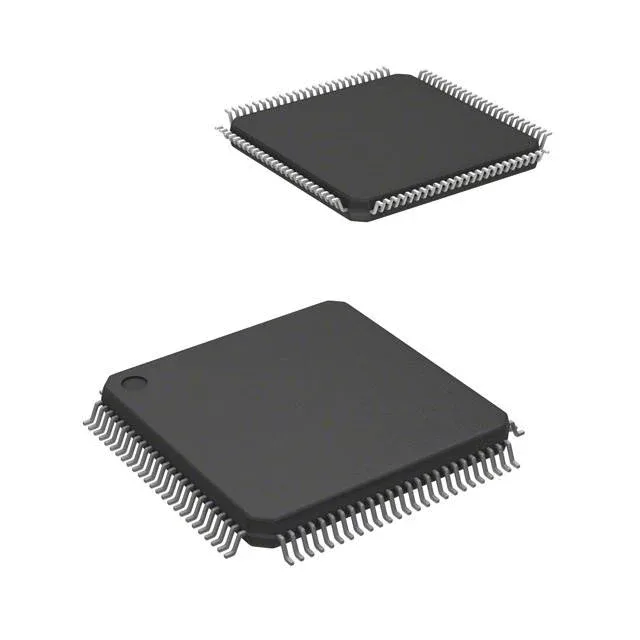
Texas Instruments LM3S9U96-IQC80-A2T — Microcontrollers & Processors (MCU / MPU / DSP)

LM3S9U96-IQC80-A2T Stellaris ARM Cortex-M3 MCU, 80 MHz, 384 KB Flash

MPNLM3S9U96-IQC80-A2T
Obsolete

Texas Instruments Stellaris ARM Cortex-M3S 9000 series 32-bit MCU, LM3S9U96-IQC80-A2T, 80 MHz core, 384 KB Flash, 96K x 8 RAM, 100-LQFP, -40°C to 85°C.

Independent supplier — new & surplus stockAuthenticity-screened · ESD-safe packingListing updated Jul 2026

Specifications

LM3S9U96-IQC80-A2T specifications
ParameterValue
SeriesStellaris® ARM® Cortex®-M3S 9000
MountingSurface Mount
Oscillator typeInternal
Program memory typeFLASH
Voltage - supply (Vcc (Vdd))1.235V ~ 1.365V
Operating temperature-40°C~85°C(TA)
Speed80MHz
PackageTape & Reel (TR)
RAM size96K x 8
Core size32-Bit Single-Core
PeripheralsBrown-out Detect/Reset, DMA, I²S, POR, PWM, WDT
ConnectivityCANbus, Ethernet, I²C, IrDA, LINbus, Microwire, QEI, SPI, SSI, UART/USART, USB OTG
Number of i (O)65
Core processorARM® Cortex®-M3
Case100-LQFP
Data convertersA/D 16x12b
Program memory size384KB (384K x 8)

Product details

80 MHz Cortex-M3 with Ethernet and USB OTG

The Texas Instruments LM3S9U96-IQC80-A2T is a 32-bit ARM Cortex-M3 MCU from the Stellaris 9000 series, clocked at 80 MHz with a single-cycle multiply and hardware divide. It carries 384 KB of Flash and 96K x 8 of SRAM, enough for a modest TCP/IP stack and application code in a single-chip Ethernet node. The 100-LQFP package brings out 65 GPIOs alongside the full peripheral set: CAN, Ethernet MAC+PHY, USB OTG, multiple I²C/SPI/UART serial ports, and a 16-channel 12-bit ADC.

16-channel ADC and industrial I/O

The 16-channel 12-bit ADC is integrated. DMA-driven buffering offloads the CPU.

Frequently asked questions

What is the closest pin-compatible alternative to LM3S9U96-IQC80-A2T?

There is no direct pin-compatible replacement from TI's current portfolio. A board redesign to a Cortex-M4 or M7 series MCU would be required for an active-sourced BOM line.

What is LM3S9U96-IQC80-A2T's listed speed?

The core runs at 80 MHz. That clock rate, combined with the single-cycle multiply and hardware divide, gives enough headroom for a real-time control loop plus a lightweight Ethernet stack without external RAM.