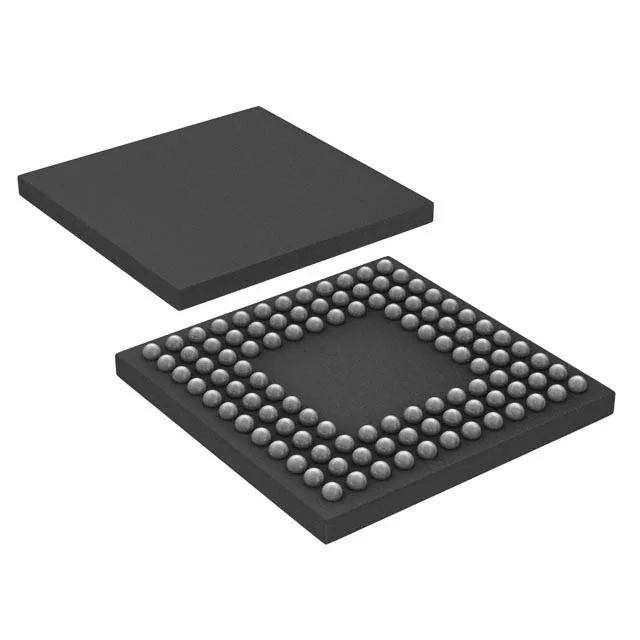
Texas Instruments LM3S9U92-IBZ80-A1 — Microcontrollers & Processors (MCU / MPU / DSP)

TI LM3S9U92-IBZ80-A1 ARM Cortex-M3 MCU, 80 MHz, 384 KB Flash

MPNLM3S9U92-IBZ80-A1
Obsolete

Texas Instruments Stellaris ARM Cortex-M3S 9000 series LM3S9U92-IBZ80-A1, 32-bit single-core MCU, 80 MHz, 384 KB Flash, 96K x 8 SRAM, 65 I/O, 108-LFBGA (10x10 mm), -40°C to 85°C, 1.235V–1.365V core supply.

Sourced new & surplus through independent channelsAuthenticity-screened · ESD-safe packingListing updated Jul 2026

Specifications

LM3S9U92-IBZ80-A1 specifications
ParameterValue
SeriesStellaris® ARM® Cortex®-M3S 9000
MountingSurface Mount
Oscillator typeInternal
Program memory typeFLASH
Voltage - supply (Vcc (Vdd))1.235V ~ 1.365V
Operating temperature-40°C~85°C(TA)
Speed80MHz
PackageTray
RAM size96K x 8
Core size32-Bit Single-Core
PeripheralsBrown-out Detect/Reset, DMA, I²S, POR, PWM, WDT
ConnectivityCANbus, EBI/EMI, Ethernet, I²C, IrDA, LINbus, Microwire, QEI, SPI, SSI, UART/USART, USB OTG
Number of i (O)65
Core processorARM® Cortex®-M3
Case108-LFBGA
Data convertersA/D 16x12b
Program memory size384KB (384K x 8)

Product details

The LM3S9U92-IBZ80-A1: It integrates a rich peripheral set including Ethernet MAC, USB OTG, CANbus, multiple UART/SPI/I²C interfaces, and a 16-channel 12-bit ADC. Typical applications include industrial control gateways, building automation controllers, and networked sensor hubs where the combination of wired connectivity and real-time control is required.

The 80 MHz core clock places this MCU in the mid-range of Cortex-M3 performance. At this speed, the part can handle real-time control loops, protocol stacks (Ethernet, CAN, USB), and moderate data processing without external memory. The 384 KB Flash is sufficient for a full TCP/IP stack plus application code; the 96 KB SRAM provides headroom for packet buffers and DMA transfers. Designers should budget for the 1.235 V to 1.365 V core supply — a dedicated LDO or switcher is required, as the core rail is not compatible with a standard 3.3 V or 1.8 V supply.

Connectivity and I/O — what the peripheral set enables

With Ethernet MAC, USB OTG, CANbus, and a full suite of serial interfaces (UART, SPI, I²C, LIN, IrDA, Microwire, SSI, QEI), this MCU can serve as the central communication node in a distributed control system. The 65 general-purpose I/O pins, combined with the external bus interface (EBI/EMI), allow connection to parallel LCDs, external SRAM/Flash, or FPGAs. The 16-channel 12-bit ADC covers analog sensor acquisition without an external converter.

Frequently asked questions

What is the replacement for LM3S9U92-IBZ80-A1?

For a pin-compatible drop-in, the closest candidates are other Stellaris 9000-series parts in the same 108-BGA package, but no specific successor is documented. Buyers should verify fit with their design team or consider a migration to a current TI Tiva or MSP432 series MCU with similar peripheral integration.

Can LM3S9U92-IBZ80-A1 be programmed with standard ARM tools?

Yes, the ARM Cortex-M3 core is supported by standard ARM development tools including Keil MDK, IAR EWARM, and GCC-based toolchains. Debug and programming are done via the SWD (Serial Wire Debug) interface, which is available on the 108-BGA package.

What is the operating temperature of LM3S9U92-IBZ80-A1?

This qualifies it for use in environments such as factory automation, outdoor telecom, and automotive cabin applications.