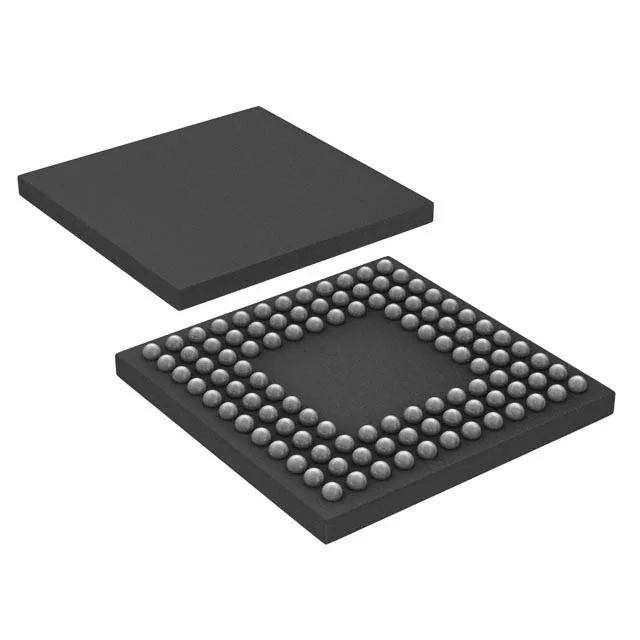
Texas Instruments LM3S9L97-IBZ80-C3 — Microcontrollers & Processors (MCU / MPU / DSP)

LM3S9L97-IBZ80-C3 Stellaris ARM Cortex-M3 MCU, 80MHz

MPNLM3S9L97-IBZ80-C3
Obsolete

Texas Instruments LM3S9L97-IBZ80-C3, Stellaris ARM Cortex-M3S 9000 series, 32-bit single-core MCU, 80MHz, 128KB Flash, 48KB RAM, Ethernet, CAN, USB OTG, 60 I/O, -40°C to 85°C, 108-LFBGA tray.

Sourced new & surplus through independent channelsAuthenticity-screened · ESD-safe packingListing updated Jul 2026

Specifications

LM3S9L97-IBZ80-C3 specifications
ParameterValue
SeriesStellaris® ARM® Cortex®-M3S 9000
MountingSurface Mount
Oscillator typeInternal
Program memory typeFLASH
Voltage - supply (Vcc (Vdd))1.235V ~ 1.365V
Operating temperature-40°C~85°C(TA)
Speed80MHz
PackageTray
RAM size48K x 8
Core size32-Bit Single-Core
PeripheralsBrown-out Detect/Reset, DMA, I²S, POR, PWM, WDT
ConnectivityCANbus, Ethernet, I²C, IrDA, LINbus, Microwire, QEI, SPI, SSI, UART/USART, USB OTG
Number of i (O)60
Core processorARM® Cortex®-M3
Case108-LFBGA
Data convertersA/D 16x10b
Program memory size128KB (128K x 8)

Product details

80 MHz Cortex-M3 with Ethernet, CAN, and USB OTG — a networked control MCU

The LM3S9L97-IBZ80-C3: With 60 GPIOs and a 16-channel 10-bit ADC, it was designed for industrial gateways, building automation controllers, and networked motor drives that needed a single-chip protocol bridge.

The 128 KB program Flash and 48 KB SRAM are modest by today's standards, but for a Stellaris-class part they support a full TCP/IP stack (lwIP or uIP), a CANopen node, and a USB device stack with room left for application code. The 48 KB RAM handles Ethernet frame buffers and CAN message objects without external memory. If your firmware image exceeds 128 KB, this part won't fit — plan for code compression or step up to a larger Flash variant in the same family.

If you're supporting a legacy design, secure your lifetime buy now. For new designs, look at TI's current Stellaris or Tiva-C series — the LM3S9L97 has no direct pin-compatible successor, but the TM4C129x family offers similar Ethernet+USB+CAN integration in a BGA package with more Flash and RAM.

108-BGA (10x10) — rework and field-replaceability

Peripheral set — Ethernet, CAN, USB OTG, and more

This MCU includes an integrated Ethernet MAC+PHY (10/100 Mbps), a CAN 2.0B controller, and a USB OTG (Host/Device) PHY — all on one die. That combination is what makes it valuable for networked control: a single chip can talk to a plant-floor CAN bus, serve a web page over Ethernet, and accept a USB flash drive for data logging. The 60 GPIOs also support quadrature encoder inputs (QEI), I²S audio, and multiple serial protocols (UART, SPI, SSI, Microwire, IrDA).

1.235 V to 1.365 V core supply — a tight rail

The core voltage range is narrow: 1.235 V to 1.365 V. That means a dedicated 1.3 V LDO or switcher, not a shared 1.2 V or 1.8 V rail. If your board already has a 1.2 V supply, you'll need an extra regulator. Plan the decoupling accordingly — the BGA's inner balls are mostly core VDD and VSS.

Not rated for under-hood automotive (125°C) or extended industrial (105°C). If your design lives in a conditioned server room, the commercial-grade sibling might save a few cents, but this is the safe choice for unheated environments.

Frequently asked questions

What is the direct replacement for LM3S9L97-IBZ80-C3?

There is no pin-compatible drop-in replacement from TI. The closest functional successor in the current TI portfolio is the TM4C129x family (Tiva-C series), which offers Ethernet, CAN, and USB OTG in a similar BGA package with more Flash and RAM. However, the pinout and register map differ — a firmware and PCB redesign is required. For a like-for-like legacy replacement, the only option is sourcing the original LM3S9L97-IBZ80-C3 from the surplus channel.

Does LM3S9L97-IBZ80-C3 have USB OTG?

Yes, the LM3S9L97-IBZ80-C3 includes a USB OTG (On-The-Go) controller with integrated PHY, supporting both Host and Device modes. This is part of the connectivity block that also includes Ethernet and CAN.

What is LM3S9L97-IBZ80-C3's core speed?

The LM3S9L97-IBZ80-C3 runs at 80 MHz from its internal oscillator or an external clock. At this speed, the Flash requires one wait state for zero-wait access — the Cortex-M3 pipeline handles it transparently, but benchmark loops may show a slight throughput penalty versus zero-wait SRAM execution.

Is LM3S9L97-IBZ80-C3 compatible with my existing design?

Compatibility depends on your existing PCB footprint and firmware. The part is in a 108-BGA (10x10 mm) package — if your board has a 108-ball BGA land pattern with 0.8 mm pitch, it may fit mechanically. Electrically, the core supply must be 1.235 V to 1.365 V, and I/O banks run at 3.3 V (or 2.5 V on some ports). Firmware written for the Stellaris LM3S peripheral library will port directly; code from other Cortex-M3 families (STM32, NXP LPC) will need a full rewrite.