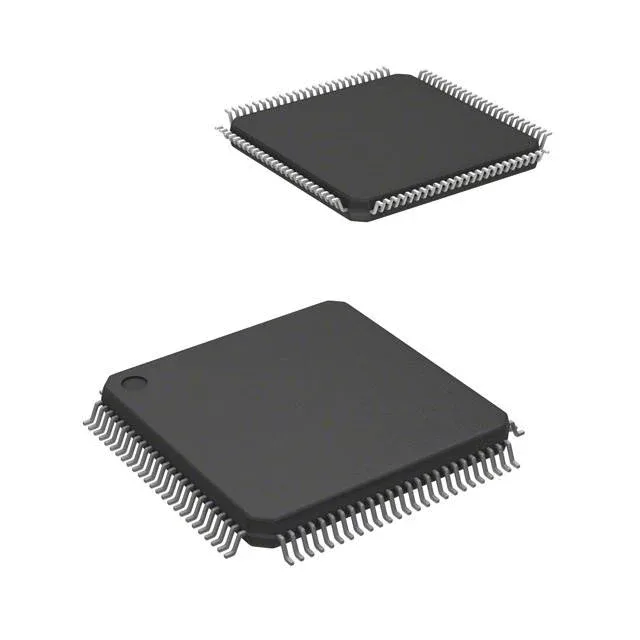
LM3S9L71-IQC80-C5T — Stellaris ARM Cortex-M3 MCU, 128KB Flash, Ethernet
Texas Instruments Stellaris LM3S9L71 series, ARM Cortex-M3 MCU, 128KB Flash, 48KB RAM, 80MHz clock, Ethernet MAC + CANbus + USB OTG, 72 GPIO, 16-ch 10-bit ADC, 100-LQFP, -40 to 85°C, Tape & Reel.
Specifications
| Parameter | Value |
|---|---|
| Series | Stellaris® ARM® Cortex®-M3S 9000 |
| Mounting | Surface Mount |
| Oscillator type | Internal |
| Program memory type | FLASH |
| Voltage - supply (Vcc (Vdd)) | 1.235V ~ 1.365V |
| Operating temperature | -40°C~85°C(TA) |
| Speed | 80MHz |
| Package | Tape & Reel (TR) |
| RAM size | 48K x 8 |
| Core size | 32-Bit Single-Core |
| Peripherals | Brown-out Detect/Reset, DMA, I²S, POR, PWM, WDT |
| Connectivity | CANbus, Ethernet, I²C, IrDA, LINbus, Microwire, QEI, SPI, SSI, UART/USART, USB OTG |
| Number of i (O) | 72 |
| Core processor | ARM® Cortex®-M3 |
| Case | 100-LQFP |
| Data converters | A/D 16x10b |
| Program memory size | 128KB (128K x 8) |
Frequently asked questions
What replaces the LM3S9L71-IQC80-C5T?
TI has no published L* successor order code for this exact variant. The Tiva TM4C series is the functional replacement family; buyers should cross-check the TM4C line for a matching Flash/RAM/speed grade, but pinout compatibility with the 100-LQFP footprint is not guaranteed and requires verification.
Does the on-chip Ethernet MAC on the LM3S9L71 support Profinet IRT or EtherNet/IP Class 3?
The integrated Ethernet MAC hardware is present and provides the media access layer. Whether its buffer depth and interrupt latency satisfy Profinet IRT or EtherNet/IP Class 3 timing depends on firmware implementation and protocol stack configuration — the MAC itself is on-chip, but a physical layer transceiver (external) is still required, and the protocol stack drives the timing.
How do I source the LM3S9L71-IQC80-C5T given the EOL status?
Normal distribution stock is exhausted. Sourcing runs through surplus lots and broker channels; sealed factory-reel material with consistent date-codes is the preferred buy. Minimum order quantity and lot condition vary by source — an RFQ will surface current availability and lot-level traceability.