What this Stellaris Cortex-M3 brings to the board
80 MHz Cortex-M3 — enough headroom for protocol stacks
At 80 MHz the core has the throughput to run a lightweight TCP/IP stack (lwIP or similar) alongside a control loop without starving either. The 96 KB SRAM leaves room for Ethernet frame buffers and a modest RTOS heap. If your application needs to service CAN, USB, and Ethernet concurrently, budget the interrupt latency — the nested vectored interrupt controller (NVIC) handles preemption cleanly, but heavy DMA use (the part includes a DMA controller) reduces CPU load for data movement.
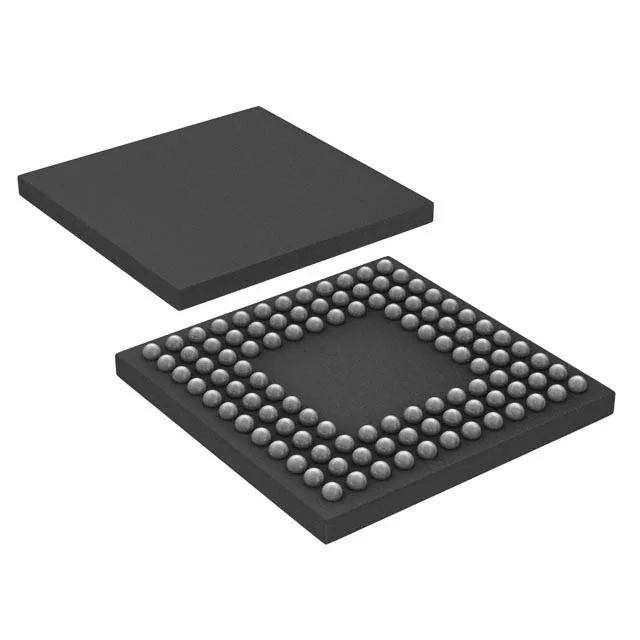
Industrial temperature range and 108-ball BGA footprint
Supply voltage is a tight 1.235 V to 1.365 V core rail, so a clean 1.3 V LDO is needed; the I/O bank runs separately (3.3 V typical, though the evidence does not specify the I/O supply range explicitly).