80 MHz Cortex-M3 with Ethernet and CAN — the networked control workhorse
The LM3S9D96-IBZ80-A2: This is a part designed for industrial control nodes, building automation gateways, and networked embedded systems that need a single-chip connectivity hub.
The 512 KB on-chip Flash gives room for a full TCP/IP stack, CANopen or EtherCAT slave firmware, and a modest application image. The 96K x 8 SRAM handles packet buffers and real-time data queues without external memory — though the EBI/EMI interface is there if you need to expand. For a design that runs both a control loop and a network stack, this memory split is the sweet spot between cost and headroom.
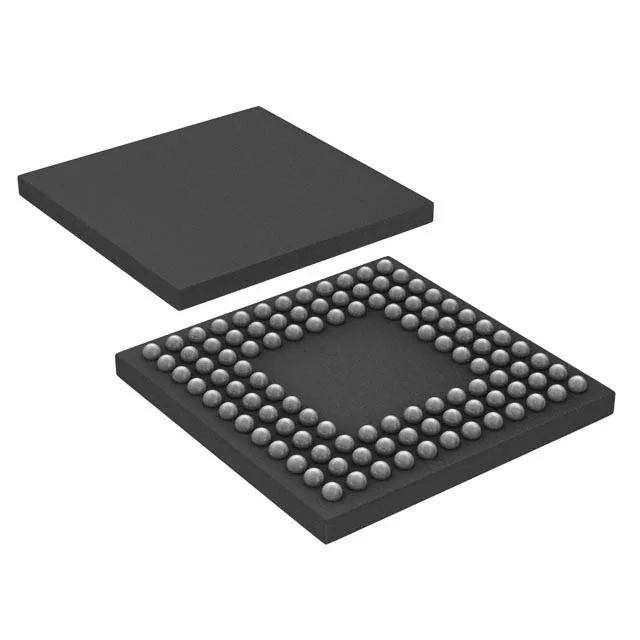
108-ball BGA — not a hand-solder part
The LM3S9D96-IBZ80-A2 comes in a 108-LFBGA package (10x10 mm body, 0.8 mm pitch typical for this class). The 65 I/Os are distributed across the ball grid; the datasheet ball-map is essential for PCB fanout planning. Supply voltage is a tight 1.235 V to 1.365 V core rail — a dedicated 1.3 V LDO or switcher is needed, not a 3.3 V tap.
The internal oscillator reduces external BOM count, though for CAN or Ethernet timing accuracy an external crystal is still recommended.
For production lines that already qualify this part, the options are a last-time-buy if still available through TI's channel, or sourcing from the independent distribution market. If you are designing a new product, look at TI's current Tiva™ C Series or TM4C12x family for a pin-compatible or software-portable path forward.