EOL status — what it means for a BOM line
80 MHz Cortex-M3 — the processing baseline for a successor
The 80 MHz core speed is the primary performance anchor. Any replacement candidate must match or exceed this clock rate to maintain timing closure on existing firmware and communications stacks. The Cortex-M3 architecture at this speed handles protocol stacks for Ethernet, USB, and CAN simultaneously with moderate headroom — a slower part will stall on the network buffers.
Memory map: 512 KB Flash, 64 KB RAM
512 KB of Flash and 64 KB of RAM define the firmware and data space. A replacement needs at least this memory footprint unless the application code is recompiled for a different memory map. The 64K x 8 RAM organization is byte-addressable, standard for Cortex-M3.
The LM3S9C97 integrates Ethernet (MAC+PHY), USB OTG, CAN, and multiple serial buses (I²C, SPI, SSI, UART, IrDA, Microwire, LIN). It also includes a quadrature encoder interface (QEI), PWM, DMA, and a 16-channel 12-bit ADC.
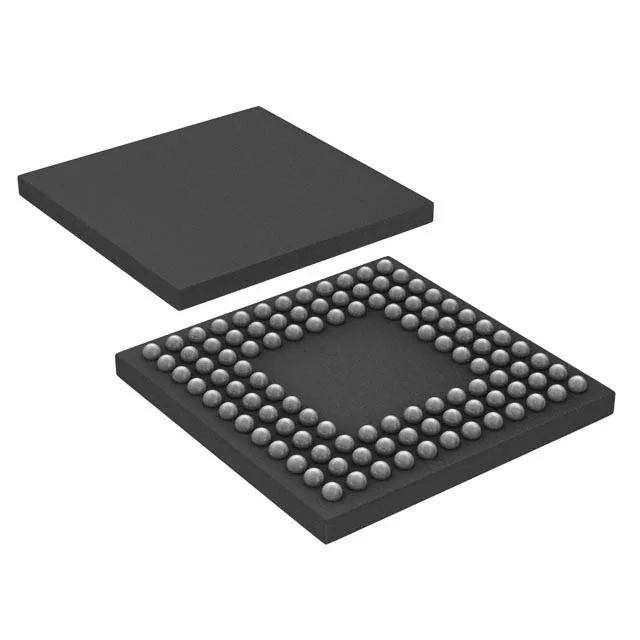
The 108-ball BGA (10x10 mm body) is a surface-mount package that requires reflow soldering and X-ray inspection for void detection.