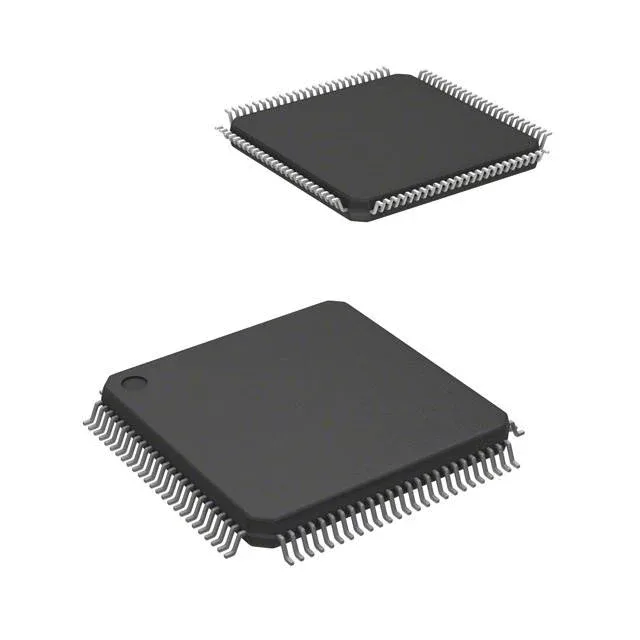
TI LM3S9B96-IQC80-C0 ARM Cortex-M3 MCU, 80MHz, 256KB Flash, Ethernet
Texas Instruments Stellaris LM3S9B96-IQC80-C0, ARM Cortex-M3S 9000 series, 80MHz, 256KB Flash, 96KB RAM, integrated Ethernet and USB OTG, CAN/LINbus, 65 I/O, 100-LQFP, -40 to 85°C, obsolete.
Specifications
| Parameter | Value |
|---|---|
| Series | Stellaris® ARM® Cortex®-M3S 9000 |
| Mounting | Surface Mount |
| Oscillator type | Internal |
| Program memory type | FLASH |
| Voltage - supply (Vcc (Vdd)) | 1.235V ~ 1.365V |
| Operating temperature | -40°C~85°C(TA) |
| Speed | 80MHz |
| Package | Tray |
| RAM size | 96K x 8 |
| Core size | 32-Bit Single-Core |
| Peripherals | Brown-out Detect/Reset, DMA, I²S, POR, PWM, WDT |
| Connectivity | CANbus, EBI/EMI, Ethernet, I²C, IrDA, LINbus, Microwire, QEI, SPI, SSI, UART/USART, USB OTG |
| Number of i (O) | 65 |
| Core processor | ARM® Cortex®-M3 |
| Case | 100-LQFP |
| Data converters | A/D 16x10b |
| Program memory size | 256KB (256K x 8) |
Frequently asked questions
Can I use the internal oscillator to clock USB OTG, or do I need an external crystal?
The internal oscillator provides the core clock, but USB OTG PLL locking requires tighter frequency tolerance than internal RC accuracy typically delivers. The BOM needs an external crystal on the USB clock input if the USB OTG peripheral is used — budget the crystal and load capacitors accordingly.
What thermal and electrical ratings govern board-level design?
Operating temperature is -40°C to 85°C (TA) with the core supplied from a 1.235V to 1.365V rail derived from a 3.3V nominal input via the integrated LDO. The 100-LQFP package thermal performance depends on the thermal pad connection to the PCB ground plane; follow the 14×14mm land pattern guidance for the supplier device package.