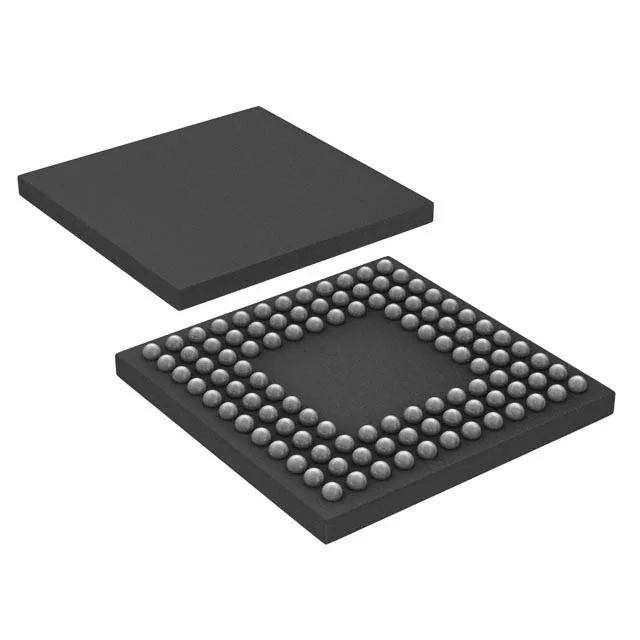
It integrates an Ethernet MAC with an internal PHY, USB OTG, two CAN 2.0B controllers, and a 16-channel 10-bit ADC, all in a 108-ball BGA package. This part was designed for networked industrial control, building automation gateways, and human-machine interfaces where a single chip handles both real-time control and connectivity.
80 MHz Cortex-M3 — processing headroom for protocol stacks
The 80 MHz core clock gives this MCU enough throughput to run a lightweight TCP/IP stack alongside a control loop without a separate communications processor. The 96 KB RAM is a comfortable buffer for Ethernet frames and USB descriptors; you can stage several large packets before needing to flush to Flash.
Peripheral set: Ethernet, USB OTG, CAN, and more
The integrated Ethernet MAC with internal PHY saves an external transceiver and simplifies the BOM for wired connectivity. USB OTG allows the device to act as either host or peripheral, useful for field firmware updates or data logging to a USB stick. Two CAN controllers support dual-channel industrial bus interfaces, and the EBI/EMI interface can expand memory or connect an external display controller. The 65 GPIOs, arranged across the 108-BGA, provide enough pins for a parallel LCD bus plus sensor inputs.
For new production runs, a pin-compatible drop-in replacement is not available from TI; designs still requiring this specific BGA footprint and peripheral set will need to source from independent distributors or surplus stock.