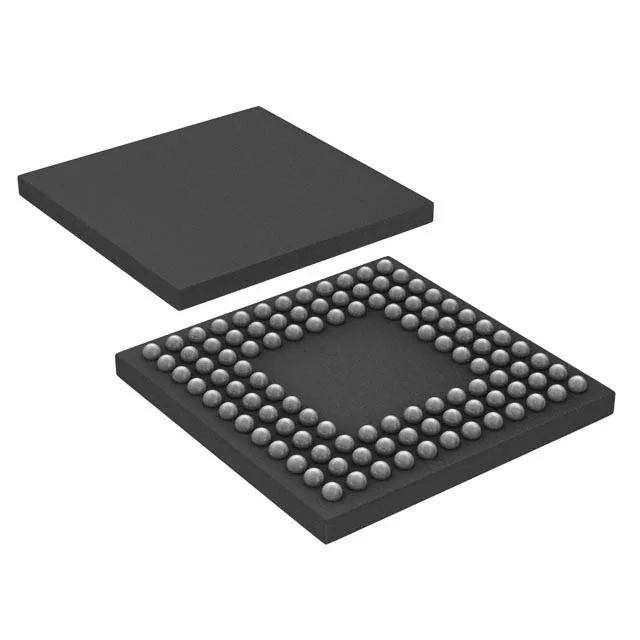
The LM3S9B96-IBZ80-C3: It was designed for connected industrial and building-automation controllers that need Ethernet, CAN, and USB OTG on a single chip — a peripheral set that was unusual for a Cortex-M3 part at its introduction. The 108-ball BGA package (10x10 mm) keeps the board area compact, though the fine pitch demands careful PCB routing and a controlled-impedance stackup for the Ethernet PHY interface.
For a production BOM that still calls out the LM3S9B96-IBZ80-C3, the only sourcing channel is the independent distribution market — broker or surplus stock. Any volume requirement should be quoted against an RFQ so current availability and pricing can be confirmed before committing the line. A redesign to a current-generation Cortex-M4 or M7 part with Ethernet and CAN is the typical long-term move, but that involves a board spin and firmware port.
80 MHz core and memory — the design-fit check
The 80 MHz core clock is the maximum rated speed; the flash requires zero wait states up to around 40 MHz and one wait state above that, which a firmware engineer must account for in the clock-configuration routine. The 256 KB Flash is adequate for a TCP/IP stack plus a CANopen or Modbus application, but leaves little headroom for over-the-air update staging — plan the image size budget early. 96 KB of SRAM is generous for a Cortex-M3 of this vintage; it can hold two full Ethernet frames (about 3 KB each) plus a small RTOS heap without thrashing.
Peripheral set and package constraints
The connectivity list — Ethernet MAC+PHY, two CAN 2.0B controllers, USB OTG, plus multiple UARTs, SPI, and I²C — makes this part a single-chip gateway candidate. The 65 GPIOs are multiplexed with these peripherals, so a pin-mux review is mandatory before layout. The 108-BGA package has a 0.8 mm ball pitch; route the Ethernet differential pairs on the top layer with a solid ground plane underneath to keep the signal quality within the PHY's return-loss spec.