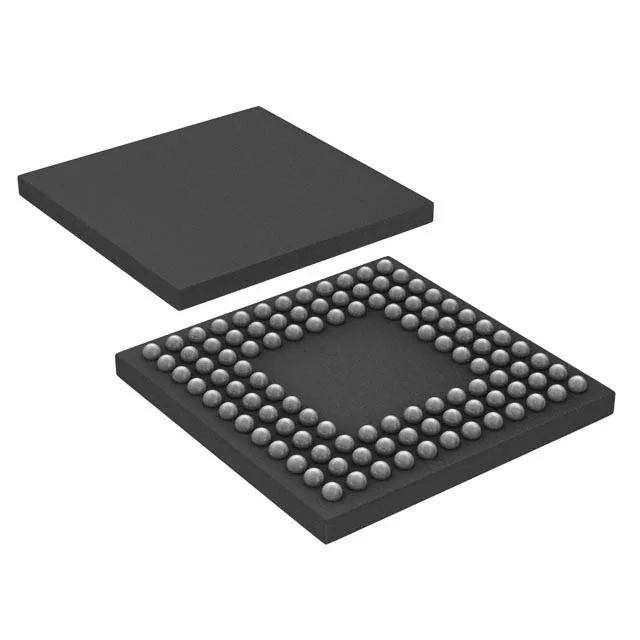
80 MHz Cortex-M3 with full connectivity — the scorch mark tells you this was the brain of an industrial gateway
The LM3S9B95-IBZ80-C3T: Its peripheral set includes Ethernet MAC, USB OTG, CAN, and multiple serial interfaces — the kind of connectivity that lands this part in embedded controllers, protocol gateways, and human-machine interfaces where a single chip must bridge fieldbus and IP networks.
Memory and I/O budget for a real application
256 KB of program Flash and 96 KB of SRAM give the firmware engineer room for a TCP/IP stack, a CANopen node, and a USB device class driver without constant code thrashing — the 80 MHz Cortex-M3 has the throughput to keep the protocol buffers fed. 65 GPIOs in a 108-ball BGA (10x10 mm) mean you can drive a parallel LCD or an external memory bus alongside the sensor interfaces, but the fine-pitch BGA demands a 4-layer PCB for fan-out and X-ray inspection for rework — a board-level repair tech will want to confirm the BGA joints before powering up. The 16-channel 10-bit ADC is adequate for reading potentiometers, thermistors, or current-sense resistors in a control loop, but not for precision instrumentation — plan for an external ADC if you need 12+ bits.
Supply rails and temperature — the bench limits
The I/O bank tolerates 3.3 V, but the core regulator must be clean; a noisy rail will produce intermittent crashes that are hell to debug.
Obsolete — the sourcing reality for a dead line
The Stellaris family was migrated to the Tiva C series, but the package and pinout differ — a board spin is required for any direct replacement. Quantities are lot-specific; a full traceability and counterfeit screen is standard before committing to a BOM line.