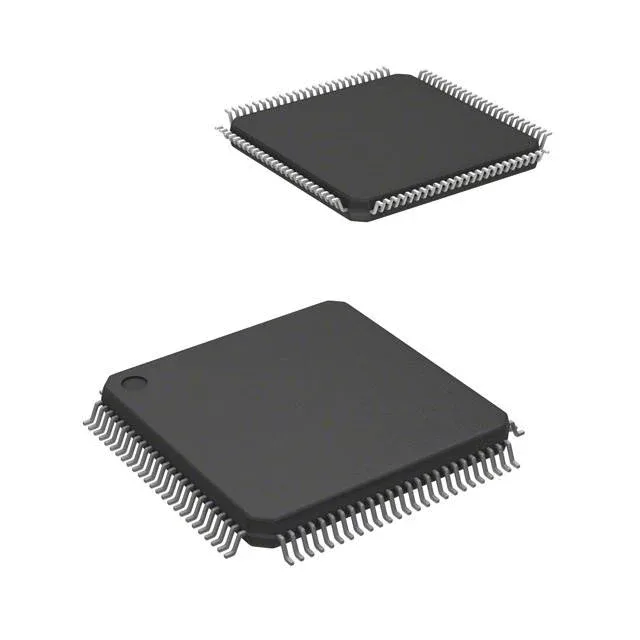
80 MHz Cortex-M3 with Ethernet and USB OTG — the gateway MCU that is now obsolete
The 60 GPIOs and 16-channel 10-bit ADC support sensor fusion and local control loops without an external FPGA or CPLD.
Industrial temperature range and peripheral mix — what it means for a retrofit or repair BOM
The 1.235 V to 1.365 V core supply is tight — your existing 1.2 V or 1.8 V rail needs a local LDO or a precision switcher; a standard 3.3 V-only board will not power the core directly.
The Stellaris family was acquired and later wound down; production ended years ago. New-manufacture stock is no longer available from the factory.
Pin-compatible alternatives — what to look for in the same footprint
Within the Stellaris LM3S9000 series, the LM3S9997-IQC80-C5T is a nominal sibling sharing the same 100-LQFP package and 80 MHz core. The difference is in the temperature grade or qualification variant (the C5T suffix). Without a full cross-reference from TI, any substitution requires a pin-to-pin comparison of the datasheets. For a new design, migrating to a current-production Cortex-M4 or M7 part with Ethernet and USB OTG in the same footprint is the practical path — but that means a board layout change and firmware port.