80 MHz core and 256 KB Flash — enough headroom for a connected control loop
The 80 MHz Cortex-M3 delivers around 1.25 DMIPS/MHz, giving you about 100 DMIPS of compute headroom. That is enough to run a lightweight TCP/IP stack, a CANopen node, and a control loop without thrashing. If your application needs more memory for large packet buffers or a GUI frame buffer, you will want to budget external SRAM or SDRAM on the external bus interface.
Ethernet, CAN, USB OTG — the connectivity trifecta
The standout feature of this MCU is its integrated Ethernet MAC+PHY, dual CAN controllers, and USB OTG. That combination lets a single chip act as a fieldbus gateway (CAN to Ethernet), a data logger (USB host to thumb drive), or a programmable logic controller with a remote HMI link. The 60 general-purpose I/O pins, many with 5 V tolerance, give you room for local sensor inputs, relay drivers, and indicator LEDs without an external GPIO expander.
Industrial temperature range and 108-ball BGA
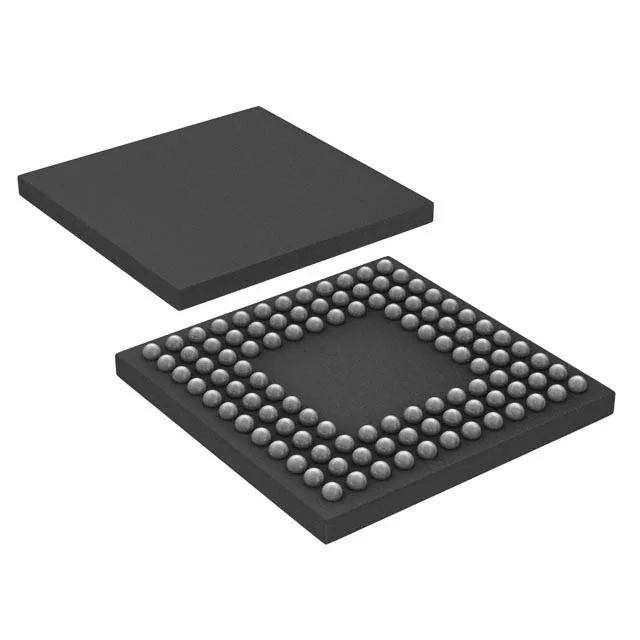
The 108-ball LFBGA package (10x10 mm, 0.8 mm pitch) is a compact footprint but requires controlled soldering — not a hand-solder part for a prototype board. Plan for a 4- or 6-layer PCB with via-in-pad if you route all 60 I/O and the Ethernet differential pairs. The core supply is a tight 1.235 V to 1.365 V, so you will need a dedicated 1.3 V LDO from the 3.3 V rail.
That means no further factory orders are accepted, and the last-time-buy window has closed.