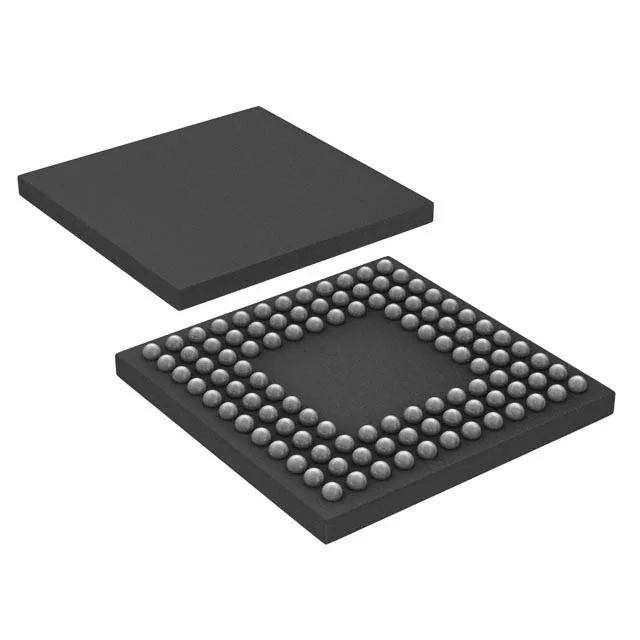
The 108-ball BGA package (10x10 mm) keeps the footprint compact for space-constrained designs.
TI formally ended production on the Stellaris line after the acquisition by Luminary Micro and subsequent portfolio consolidation. There is no direct pin-compatible successor from TI; the Stellaris architecture was superseded by the Tiva C Series (TM4C) family, which uses a different pinout and peripheral map. For an existing BOM that cannot be redesigned, the only sourcing channel is the independent distribution market — new-old-stock or surplus inventory, with date-code and lot-traceability verification critical given the age of the parts in the channel.
The core supply operates from 1.235 V to 1.365 V — a dedicated 1.3 V rail, not the usual 3.3 V or 1.8 V — so the power tree needs a separate low-noise LDO or switcher for the VDD. The I/O bank runs at 3.3 V. With 60 GPIOs and multiplexed peripheral functions, the pin-mux configuration must be locked early in the layout stage to avoid signal-routing conflicts.
Peripheral set — Ethernet, CAN, and USB on one die
This MCU includes an Ethernet MAC with integrated PHY, a CAN 2.0B controller, and a USB OTG interface — a rare combination in a single Cortex-M3 device from that era. The 16-channel 10-bit ADC, PWM timer, and DMA controller round out the set for motor-control or sensor-fusion applications that also need network connectivity.