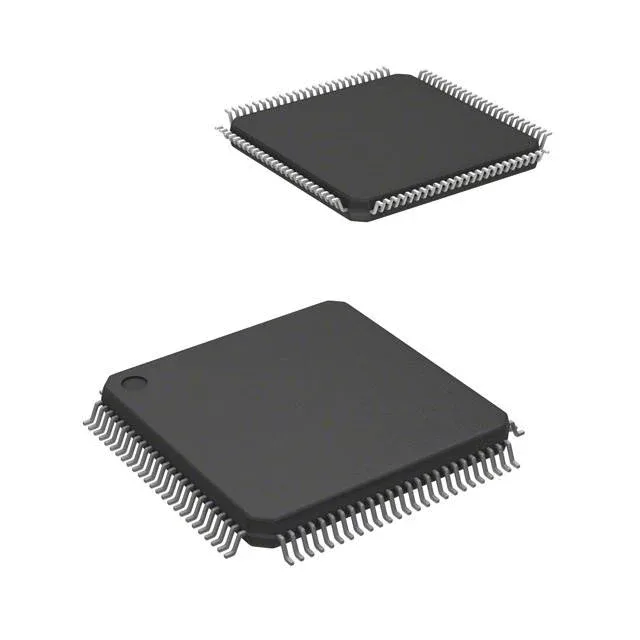
Connectivity and peripheral fit — Ethernet, CAN, USB OTG on one die
What sets this part apart from the smaller Stellaris family members is the integrated Ethernet MAC+PHY, a CAN 2.0B controller, and a USB OTG interface — all on the same silicon. That lets a single MCU handle a gateway function: aggregate sensor data over CAN or serial links and push it upstream over Ethernet or USB. The EBI/EMI bus also brings out a parallel memory or FPGA interface, which is rare in this package class. The 65 GPIOs in the 100-LQFP package leave enough headroom for a local keypad, display, and a handful of opto-coupled inputs without needing a port expander.
No further production runs are planned, and the last-time-buy window has closed. If this part is on your BOM, you are looking at the surplus and broker channel for any remaining inventory. There is no direct pin-compatible drop-in replacement from TI within the Stellaris family; the architecture was superseded by the Tiva C series, which uses a different pinout and requires a board respin.
Supply rail and temperature grade — the operating envelope
The core runs from a 1.235 V to 1.365 V supply — a narrow, low-voltage rail that demands a clean regulated source, not a direct battery tap. The I/O ring is separate and runs at 3.3 V.