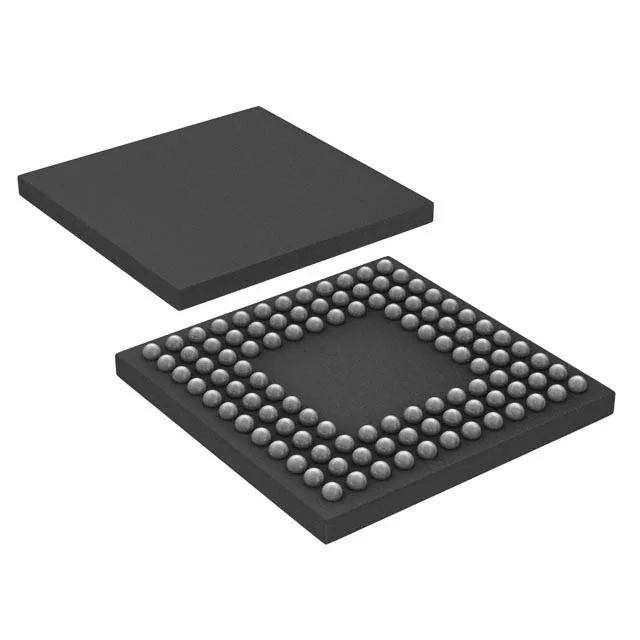
Texas Instruments LM3S8C62-IBZ80-A1T — Microcontrollers & Processors (MCU / MPU / DSP)

LM3S8C62-IBZ80-A1T Stellaris ARM Cortex-M3 MCU, 80 MHz

MPNLM3S8C62-IBZ80-A1T
End of Life

Texas Instruments Stellaris® ARM® Cortex®-M3S 8000 series LM3S8C62-IBZ80-A1T, 32-bit MCU, 80MHz, 512KB Flash, 64K x 8 SRAM, Ethernet + CAN, 16x12b ADC, -40~85°C, 108-BGA.

Sourced new & surplus through independent channelsAuthenticity-screened · ESD-safe packingListing updated Aug 2026

Specifications

LM3S8C62-IBZ80-A1T specifications
ParameterValue
SeriesStellaris® ARM® Cortex®-M3S 8000
MountingSurface Mount
Oscillator typeInternal
Program memory typeFLASH
Voltage - supply (Vcc (Vdd))3V ~ 3.6V
Operating temperature-40°C~85°C(TA)
Speed80MHz
PackageTape & Reel (TR)
RAM size64K x 8
Core size32-Bit Single-Core
PeripheralsBrown-out Detect/Reset, DMA, Motor Control PWM, POR, PWM, WDT
ConnectivityCANbus, Ethernet, I²C, IrDA, LINbus, Microwire, QEI, SPI, SSI, UART/USART
Number of i (O)46
Core processorARM® Cortex®-M3
Case108-LFBGA
Data convertersA/D 16x12b
Program memory size512KB (512K x 8)

Product details

80 MHz Cortex-M3 with Ethernet and CAN — the industrial gateway MCU

This is the connectivity-rich member of the family — built for industrial control, motor drives, building automation, and networked sensor hubs where a single chip must handle both real-time control and plant-floor communication.

512 KB Flash / 64 KB SRAM — sizing the firmware and data buffers

The 512 KB on-chip Flash (512K x 8) is sized for a substantial application image — a full TCP/IP stack, CANopen or EtherCAT slave stack, plus the control loop firmware fits without external memory. The 64 KB SRAM (64K x 8) provides runtime workspace for packet buffers, sensor data arrays, and RTOS task stacks.

Ethernet + CAN + 46 GPIOs — connectivity without glue logic

The LM3S8C62 integrates both Ethernet MAC+PHY and CAN 2.0B controllers, plus I²C, SPI, SSI, UART, IrDA, LIN, Microwire, and QEI (quadrature encoder interface). The 46 GPIOs give enough headroom for a keypad, LCD interface, and a handful of discrete I/Os alongside the serial buses. The QEI is a nice touch for motor-feedback applications — it counts encoder pulses in hardware, offloading the CPU. The Ethernet PHY is internal, so the BOM only needs a magnetics module and RJ45 connector — no external PHY chip.

108-BGA (10x10 mm) — footprint and assembly considerations

The 108-ball BGA with 0.8 mm pitch (10x10 mm body) requires a multi-layer PCB with via-in-pad or microvias for routing the inner balls. This is not a hand-solder part — expect x-ray inspection and reflow with a controlled profile. Supply voltage is 3.0 V to 3.6 V, so a single 3.3 V rail powers the core and I/O.

Frequently asked questions

What is the clock speed of LM3S8C62-IBZ80-A1T?

The core runs at 80 MHz. That is the maximum CPU clock from the internal oscillator or an external crystal. At 80 MHz the Flash requires one wait state for zero-wait access at lower speeds — the boot code should configure the flash timing accordingly.

Does LM3S8C62-IBZ80-A1T have Ethernet?

Yes. It integrates a 10/100 Ethernet MAC with an internal PHY. The BOM needs only a magnetics module (e.g., H1102NL) and an RJ45 connector — no separate PHY chip. The MAC supports full-duplex and half-duplex modes with flow control.