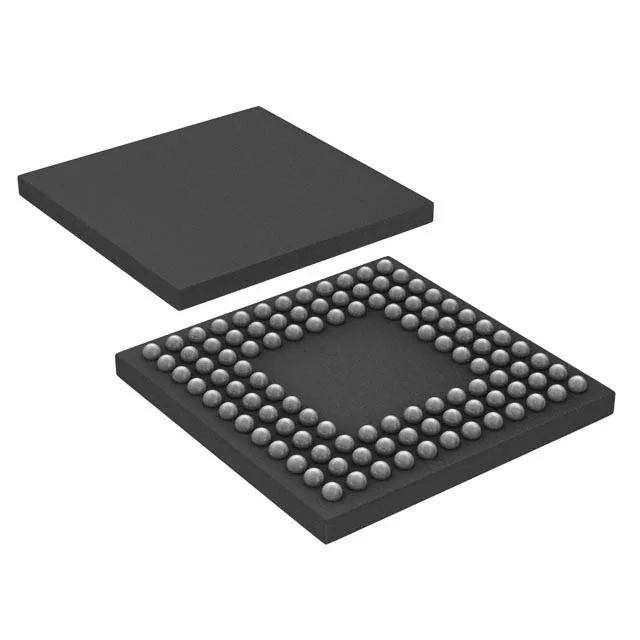
The LM3S8971-IBZ50-A2 is classified as obsolete by Texas Instruments. For production BOMs that cannot be redesigned, the only procurement path is through independent distribution — surplus, new-old-stock, or broker-channel inventory. Expect date-code spreads and condition grading (sealed reel vs. tray) to vary by lot; we verify original factory packaging where possible.
The core runs at 50 MHz, which is the mid-range tier for Cortex-M3 devices. That clock rate handles most industrial control loops — motor commutation at a few kHz, Ethernet packet processing at 10/100 Mbps, and CAN message handling — without stalling. The 38 I/O pins, routed through the 108-ball BGA, give enough GPIO for parallel sensor interfaces and a parallel LCD bus if needed.
Ethernet and CANbus — industrial networking on one chip
This MCU integrates both Ethernet MAC and CANbus controllers, which is a distinguishing feature for a 50 MHz part. It also includes IrDA, SPI, SSI, UART/USART, Microwire, and QEI interfaces. The Ethernet port makes it a candidate for industrial gateways, remote I/O modules, and building-management controllers that need a single-chip network endpoint. The CANbus interface suits it for vehicle-bus or factory-floor device networks. The 8-channel 10-bit ADC covers basic analog sensing without an external converter.
108-ball BGA — footprint and rework considerations
The package is a 108-ball LFBGA with a 10x10 mm body. The fine pitch means a multilayer PCB with microvia fanout is standard, and X-ray inspection is recommended after reflow. For rework, the BGA requires a pre-bake if the moisture-sealed tray has been open beyond the floor-life window.