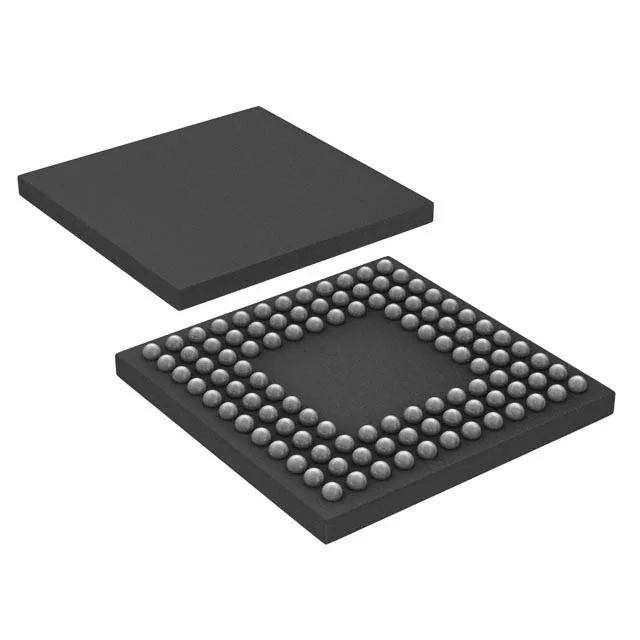
Production has ended; there is no current factory lead time or LTB window to enter. Sourcing now runs through independent distribution — we quote against an RFQ, confirm availability at quote time, and ship from verified surplus or new-old-stock inventory. For a BOM line that must stay on this footprint, the independent channel is the only option.
50 MHz Cortex-M3 with Ethernet and CAN — what it buys you
The ARM Cortex-M3 core runs at 50 MHz, a comfortable mid-range speed for industrial control, building automation, and gateway applications that need to run a lightweight TCP/IP stack and a CANopen node without breaking a sweat. That Ethernet+CAN combination is rare in the 50 MHz Cortex-M3 class — most peers offer one or the other, not both on-chip. The 46 GPIOs give enough headroom for a parallel LCD interface or a bank of opto-isolated inputs while keeping serial peripherals active. The internal oscillator reduces external BOM count, but for Ethernet timing accuracy an external crystal is still recommended.
108-BGA (10x10 mm) — layout notes
The 108-ball LFBGA on a 10x10 mm body with 0.8 mm pitch is a four-layer minimum footprint — two signal layers plus a solid ground plane and a power plane for the 2.5 V rail. The BGA's center balls carry VDD and VSS; a via-in-pad or at least a dogbone breakout is needed for the inner rows. No exposed thermal pad on this package; heat dissipation is through the solder balls and the PCB copper.