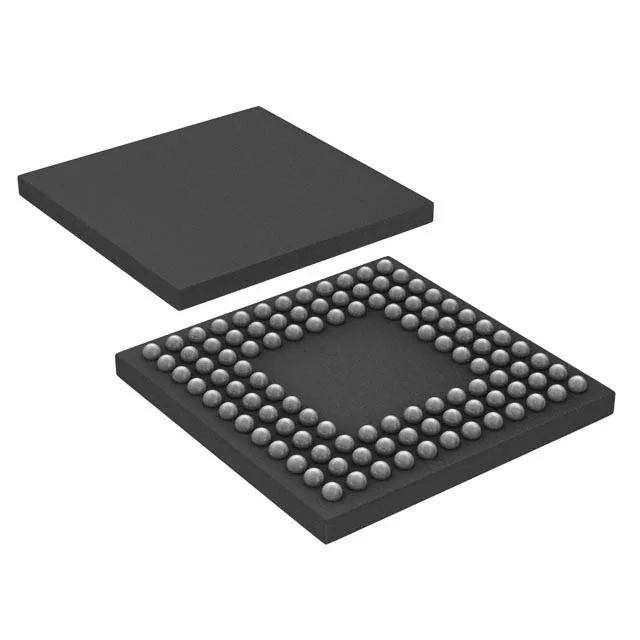
50MHz Cortex-M3 with CAN and Ethernet — the industrial-control workhorse
It integrates a CANbus interface and a 10/100 Ethernet MAC, making it a single-chip fit for industrial gateways, motor drives, and building-automation controllers that need both fieldbus and IP connectivity. The 108-LFBGA (10x10 mm) package packs 38 GPIOs and an 8-channel 10-bit ADC into a compact footprint, with a supply range of 2.25V to 2.75V.
256KB Flash, 64KB SRAM — firmware and data buffer budget
The 256KB Flash supports a full TCP/IP stack, CANopen or EtherCAT slave code, plus application logic without external memory. The 64KB SRAM handles packet buffers and real-time data queues; for Ethernet-heavy designs, budget about 16KB for the stack and descriptor rings, leaving 48KB for application state. If your firmware exceeds 256KB, this part forces a code-shrink or a move to the larger-memory Stellaris siblings.
108-BGA — layout and rework considerations
The 108-LFBGA (10x10 mm) uses a 0.8 mm ball pitch, which is routable on a 4-layer board with 5/5 mil trace/space. No thermal pad — the BGA body dissipates through the balls to the PCB ground plane. For rework, MSL 3 handling applies: bake at 125°C for 24 hours if the moisture barrier bag has been open longer than the floor life. A 10x10 mm BGA is reballable with a stencil and preforms, but the fine pitch demands a good rework station.
Expect date codes from the last production runs; we screen for counterfeit and test to datasheet limits before shipment.