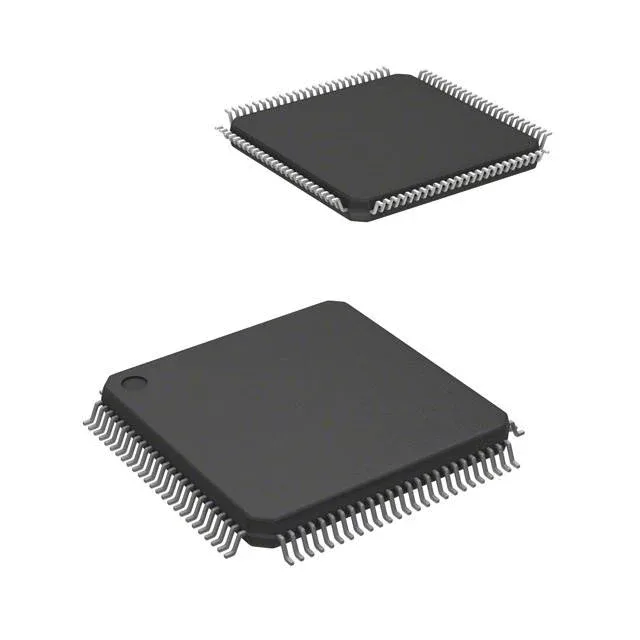
TI LM3S8930-IQC50-A2T MCU — 256KB Flash, 50MHz, 100-LQFP, Obsolete
MPNLM3S8930-IQC50-A2T
Obsolete
Texas Instruments Stellaris LM3S8930-IQC50-A2T, ARM Cortex-M3S 8000 series, 256KB Flash, 64KB RAM, 50MHz core, 34 I/O, CANbus/Ethernet/I2C/SPI/SSI/UART, 2.25-2.75V supply, -40 to 85°C operating temperature, 100-LQFP (14x14mm) tape-and-reel.
Independent supplier — new & surplus stockAuthenticity-screened · ESD-safe packingListing updated Jul 2026
Specifications
| Parameter | Value |
|---|---|
| Series | Stellaris® ARM® Cortex®-M3S 8000 |
| Mounting | Surface Mount |
| Oscillator type | Internal |
| Program memory type | FLASH |
| Voltage - supply (Vcc (Vdd)) | 2.25V ~ 2.75V |
| Operating temperature | -40°C~85°C(TA) |
| Speed | 50MHz |
| Package | Tape & Reel (TR) |
| RAM size | 64K x 8 |
| Core size | 32-Bit Single-Core |
| Peripherals | Brown-out Detect/Reset, POR, PWM, WDT |
| Connectivity | CANbus, Ethernet, I²C, IrDA, Microwire, SPI, SSI, UART/USART |
| Number of i (O) | 34 |
| Core processor | ARM® Cortex®-M3 |
| Case | 100-LQFP |
| Program memory size | 256KB (256K x 8) |
Frequently asked questions
Does the 2.25V to 2.75V supply range cause issues in a 3.3V system?
Yes — the Vdd window sits below the standard 3.3V logic rail. The brown-out detect and POR peripherals are calibrated to this narrow band, which means a 3.3V supply run at the low end of tolerance can trigger an unsolicited reset. Any shared-signal level translation between the MCU and 3.3V peripheral devices needs to account for the 2.75V maximum rail. New designs should budget a dedicated LDO for this rail or move to a 3.3V-tolerant MCU variant.