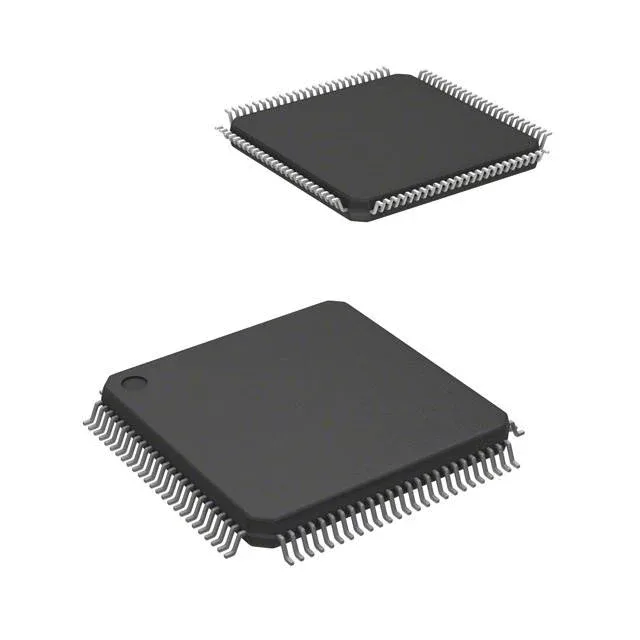
50 MHz Cortex-M3 with Ethernet and CAN — what you get
The 256 KB Flash is the main constraint for firmware engineers porting an application to this part. A full Ethernet stack with HTTP server and CAN messaging typically lands between 80 KB and 120 KB, leaving headroom for application code and a bootloader. The 64 KB SRAM splits between stack, heap, and DMA buffers — enough for a couple of 1.5 KB Ethernet frames plus a CAN message queue, but tight if you need large lookup tables or double-buffered graphics. If your design already runs on a Stellaris part with larger memory, the migration path is density-dependent within the same 100-pin footprint.
Industrial temperature and supply rails
The I/O pins are 5 V tolerant on some ports, but the VDD spec is the one to watch for brown-out margin. The internal oscillator can run the core without an external crystal, though Ethernet timing will require the external 25 MHz clock source.
That means the only supply channel is the independent distribution market — surplus stock, new-old-stock, or customer-return inventory.