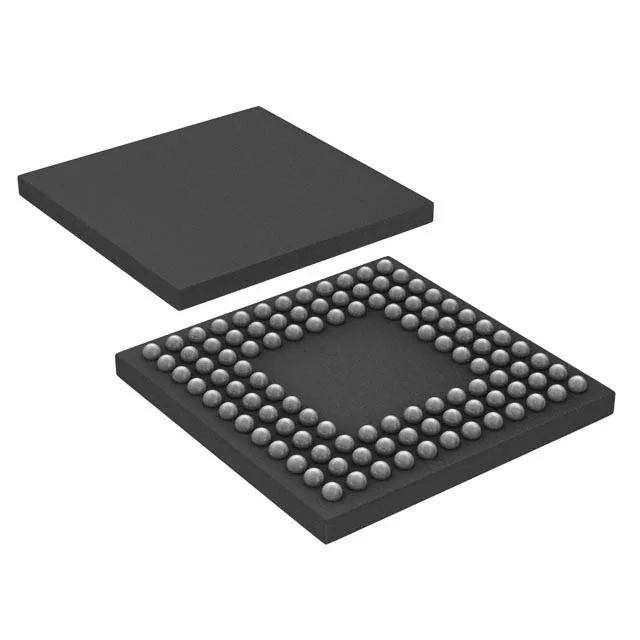
The 108-ball BGA (10x10 mm) package keeps the footprint compact, but it is a fine-pitch part requiring controlled assembly and X-ray inspection.
50 MHz Cortex-M3 — where it sits in the performance stack
The 32-bit single-cycle multiply and hardware divide handle the arithmetic that 8- or 16-bit MCUs struggle with. If your application needs more throughput, you would be looking at a 120 MHz+ Cortex-M4 or M7; if cost is the driver, a 48 MHz Cortex-M0+ might cover it.
Memory sizing for the firmware engineer
The Flash holds a TCP/IP stack plus a CANopen or Modbus application with room to spare; the SRAM gives enough headroom for a couple of Ethernet frames (around 1.5 KB each) and a modest RTOS heap. If your firmware image is already pushing 100 KB or your data buffers exceed 40 KB, you will be tight — consider whether the application can page or compress.
Ethernet and CANbus on one die — the connectivity story
Having both Ethernet and CANbus integrated is the standout feature of this Stellaris part. It saves a separate Ethernet controller chip and a CAN transceiver interface (though you still need the physical-layer transceivers). Typical applications include industrial gateways, programmable logic controllers, building-management controllers, and any design that bridges a fieldbus to an IP network.
That means the board needs a 2.5 V regulator, and any 3.3 V I/O peripherals require level translation. Check your existing power tree before committing this part to a BOM.
The Stellaris family was migrated to the Tiva™ C Series, but those parts use different package options and peripheral maps — a drop-in swap is not available. For a BOM that already qualifies this MCU, the only sourcing channel is the independent distribution market: new-old-stock, surplus, and verified broker inventory.
BGA package — layout and assembly notes
The 108-ball BGA on a 10x10 mm array is a 0.8 mm pitch part. That is not the finest pitch, but it still requires a multi-layer PCB with microvias or blind vias if you need to escape all balls on a tight board. The package is not hand-solderable; you need a reflow oven and X-ray inspection for joint verification.