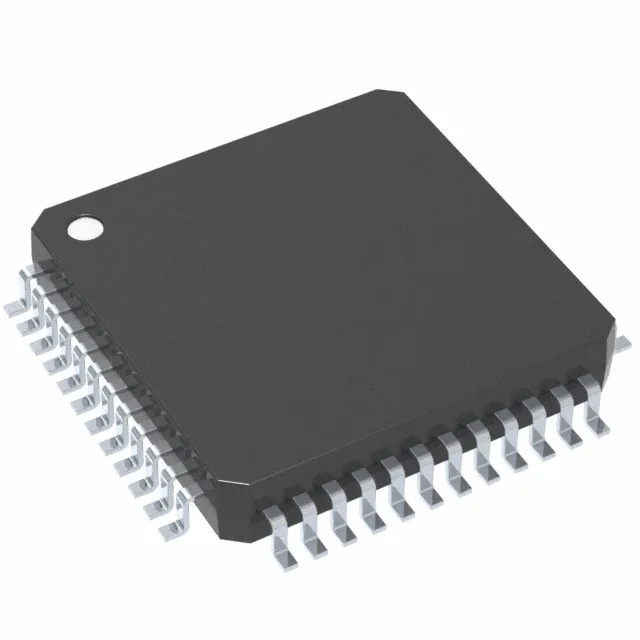
Texas Instruments LM3S812-IQN50-C2T — Microcontrollers & Processors (MCU / MPU / DSP)

Texas Instruments LM3S812-IQN50-C2T ARM Cortex-M3 MCU

MPNLM3S812-IQN50-C2T
NRND

Texas Instruments Stellaris ARM Cortex-M3S 800 series LM3S812-IQN50-C2T, 32-bit single-core MCU at 50 MHz, 64 KB Flash, 8 KB RAM, 34 I/O, 48-LQFP (7x7 mm), 3 V–3.6 V supply, -40°C to 85°C operating temperature, tape and reel.

$4.4616Ref. price · indicative, final on quote
Independent supplier — new & surplus stockAuthenticity-screened · ESD-safe packingListing updated Jul 2026

Specifications

LM3S812-IQN50-C2T specifications
ParameterValue
SeriesStellaris® ARM® Cortex®-M3S 800
MountingSurface Mount
Oscillator typeInternal
Program memory typeFLASH
Voltage - supply (Vcc (Vdd))3V ~ 3.6V
Operating temperature-40°C~85°C(TA)
Speed50MHz
PackageTape & Reel (TR)
RAM size8K x 8
Core size32-Bit Single-Core
PeripheralsBrown-out Detect/Reset, POR, PWM, WDT
ConnectivityI²C, Microwire, SPI, SSI, UART/USART
Number of i (O)34
Core processorARM® Cortex®-M3
Case48-LQFP
Data convertersA/D 2x10b
Program memory size64KB (64K x 8)

Product details

That means TI has flagged it for eventual end-of-life — no new product should start with this MCU. For existing production, you are looking at a last-time-buy window or sourcing through the independent channel. If you are qualifying a replacement, the Stellaris family has pin-compatible higher-density siblings that share the same 48-LQFP footprint and supply range, though no single official successor is listed on this record.

At 50 MHz the Cortex-M3 core can handle a 10 kHz PID loop with margin for communications overhead. The 8 KB SRAM is tight for large data buffers — budget it for a few hundred bytes of state variables plus a modest UART or SPI FIFO. The 64 KB Flash holds a bare-metal application or a small RTOS kernel; if your firmware needs OTA staging or a file system, you will bump against the ceiling.

Peripherals and I/O — what connects where

The 34 I/O lines are enough for a keypad matrix, a character LCD, and a few sensor interrupts. The two 10-bit ADC channels are single-ended — fine for reading a potentiometer or a thermistor, but not for differential or high-resolution measurements. The UART/USART and SPI interfaces cover common serial protocols; the Microwire and SSI modes add legacy sensor compatibility. An internal oscillator is on die, so you can save a crystal for non-critical timing.

Frequently asked questions

Is LM3S812-IQN50-C2T obsolete or NRND?

It is not yet fully discontinued, but TI has signaled it is on the path to end-of-life. For existing production, source it through independent distribution against an RFQ; for new designs, look at a pin-compatible Stellaris sibling with the same 48-LQFP footprint.

What is the replacement for LM3S812-IQN50-C2T?

No single official replacement is listed on this record. The Stellaris family includes higher-density parts in the same 48-LQFP package and 3 V–3.6 V supply range — a pin-compatible upgrade with more Flash or RAM would be the natural next step. Confirm the exact pinout and peripheral set against your PCB before committing.

Does LM3S812-IQN50-C2T have a datasheet with pinout?

The datasheet is available from Texas Instruments and includes the full pinout for the 48-LQFP package. Verify the pin assignments against your schematic — the 48-pin LQFP layout is standard across the Stellaris 800 series, but always cross-check the specific signal mapping.