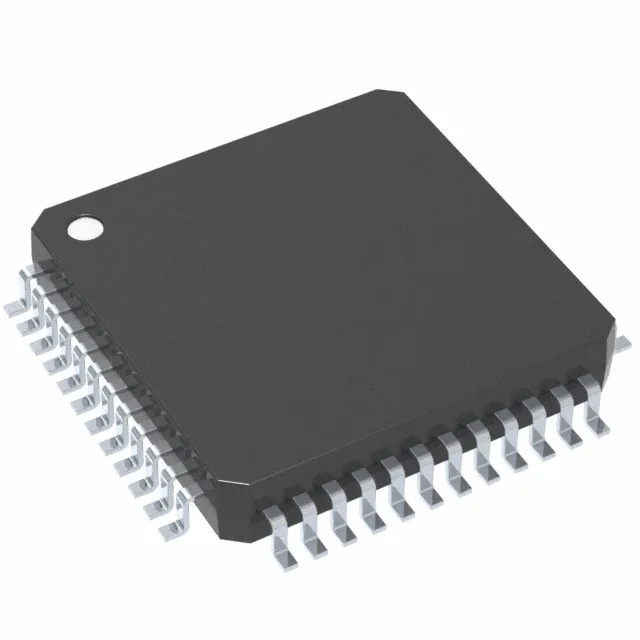
TI LM3S808-IQN50-C2T Stellaris ARM Cortex-M3 MCU, 50MHz, 64KB Flash, 48-LQFP
TI Stellaris LM3S808 ARM Cortex-M3S 800 series MCU, 50MHz, 64KB Flash, 8KB RAM, 28 GPIO, I²C/SPI/SSI/UART/Microwire, 8x10b ADC, internal oscillator, 3V–3.6V, -40°C to 85°C, 48-LQFP Tape & Reel.
Specifications
| Parameter | Value |
|---|---|
| Series | Stellaris® ARM® Cortex®-M3S 800 |
| Mounting | Surface Mount |
| Oscillator type | Internal |
| Program memory type | FLASH |
| Voltage - supply (Vcc (Vdd)) | 3V ~ 3.6V |
| Operating temperature | -40°C~85°C(TA) |
| Speed | 50MHz |
| Package | Tape & Reel (TR) |
| RAM size | 8K x 8 |
| Core size | 32-Bit Single-Core |
| Peripherals | Brown-out Detect/Reset, POR, PWM, WDT |
| Connectivity | I²C, Microwire, SPI, SSI, UART/USART |
| Number of i (O) | 28 |
| Core processor | ARM® Cortex®-M3 |
| Case | 48-LQFP |
| Data converters | A/D 8x10b |
| Program memory size | 64KB (64K x 8) |
Frequently asked questions
Panel ambient can hit 70 °C — does the 85 °C rating give enough derating headroom for enclosed-panel deployments?
The 15 °C delta between a 70 °C ambient and the 85 °C ceiling is tight once self-heating under full 28-I/O load is factored in. A board-level thermal analysis is required before committing the part to a hot-running sealed enclosure — the margin disappears faster than the rating suggests.
Can I use the internal oscillator for SSI and Microwire slave interfaces at 2 MHz bus speed?
The internal oscillator on this Stellaris part is 12 MHz rated and provides reasonable accuracy for UART communication. For SSI and Microwire master-mode interfaces at 2 MHz, datasheet-level oscillator tolerance must be verified — a board-level characterization or external crystal is the conservative choice for slave-interface timing margin.