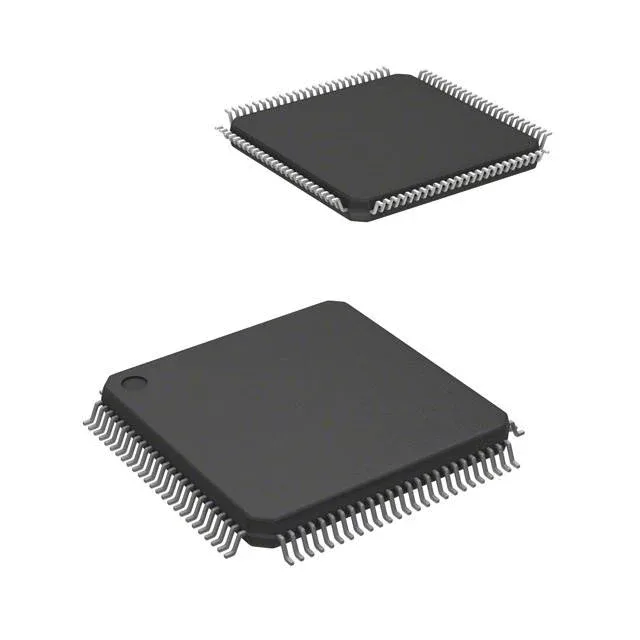
Texas Instruments LM3S6G65-IQC80-A1 — Microcontrollers & Processors (MCU / MPU / DSP)

LM3S6G65-IQC80-A1 Stellaris ARM Cortex-M3 MCU, 80 MHz

MPNLM3S6G65-IQC80-A1
End of Life

Texas Instruments Stellaris ARM Cortex-M3S 6000 series LM3S6G65-IQC80-A1, 32-bit MCU, 80 MHz, 512 KB Flash, 64 KB RAM, Ethernet MAC, 100-LQFP, -40°C to 85°C.

Independent supplier — new & surplus stockAuthenticity-screened · ESD-safe packingListing updated Aug 2026

Specifications

LM3S6G65-IQC80-A1 specifications
ParameterValue
SeriesStellaris® ARM® Cortex®-M3S 6000
MountingSurface Mount
Oscillator typeInternal
Program memory typeFLASH
Voltage - supply (Vcc (Vdd))3V ~ 3.6V
Operating temperature-40°C~85°C(TA)
Speed80MHz
PackageTray
RAM size64K x 8
Core size32-Bit Single-Core
PeripheralsBrown-out Detect/Reset, DMA, POR, PWM, WDT
ConnectivityEthernet, I²C, IrDA, Microwire, QEI, SPI, SSI, UART/USART
Number of i (O)46
Core processorARM® Cortex®-M3
Case100-LQFP
Data convertersA/D 16x12b
Program memory size512KB (512K x 8)

Product details

That means no last-time-buy notice pending, no end-of-life risk for production programs starting today.

The 64 KB RAM handles Ethernet frame buffers and multiple protocol contexts — useful for a device that needs to talk on the network while running local control loops.

With 46 GPIOs in the 100-LQFP package, most designs won't run out of pins for local I/O.

Package and layout note

The internal oscillator means you can skip the external crystal for non-timing-critical applications, though the Ethernet PHY will still need its own reference clock.

Frequently asked questions

Can LM3S6G65-IQC80-A1 be used for Ethernet applications?

Yes, the device includes an integrated Ethernet MAC controller in its connectivity block. It can handle 10/100 Mbps Ethernet when paired with an external PHY transceiver.

What is the closest pin-compatible alternative in this family?

Within the Stellaris 6000 series, several variants share the 100-LQFP pinout and differ mainly in Flash/RAM size and peripheral mix. Check the LM3S6G6x family data for density options that match your code footprint — the base pin assignment is consistent across the series.