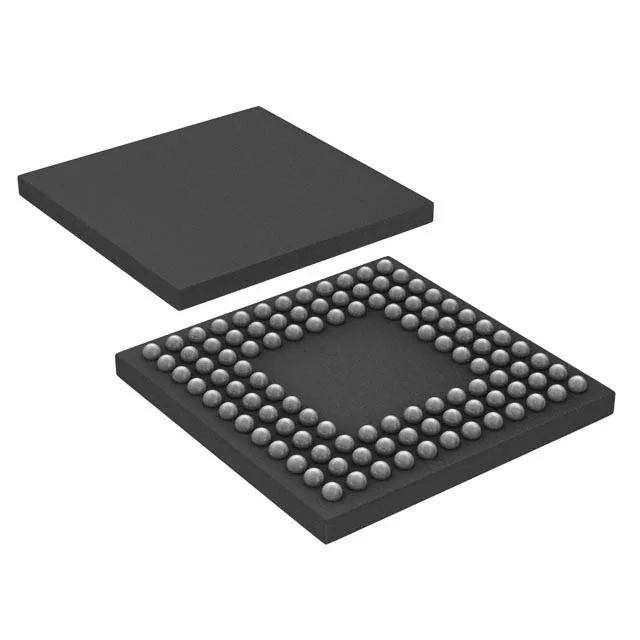
512 KB Flash plus Ethernet — what that buys the design
The LM3S6G11-IBZ80-A1: The 512 KB Flash (512K x 8) gives enough headroom for a full TCP/IP stack, an RTOS kernel, and application logic without external memory. The 80 MHz Cortex-M3 core handles the protocol processing and control loops in one part, cutting BOM count versus a two-chip MCU-plus- Ethernet-controller approach. The 64K x 8 SRAM supports moderate packet buffering; designs with heavy throughput should budget the DMA engine for memory-to-peripheral transfers.
108-BGA (10x10) — rework and layout realities
The 108-ball BGA on a 10x10 mm body is a fine-pitch part.
Internal oscillator is on-chip, but the Ethernet PHY needs an external crystal or oscillator for the MAC clock.
Peripherals and I/O count
The PWM channels are useful for motor drive or LED dimming; the DMA engine offloads the core during Ethernet frame transfers. The 46 I/O count is adequate for a control board with a parallel LCD, keypad matrix, and sensor inputs, but check the pin-mux table in the datasheet for peripheral conflicts before committing the schematic.
For BOM planning, that removes the urgency to qualify a replacement or stockpile. The base product number LM3S6G11 covers the family, and the IBZ80-A1 suffix specifies the 80 MHz speed grade and BGA package variant.