50 MHz Cortex-M3 — enough for moderate protocol stacks
The 50 MHz core speed with the ARM Cortex-M3 pipeline handles a lightweight TCP/IP stack, Modbus TCP, or a basic RTOS scheduler without breaking a sweat. The 128 KB Flash ceiling means the application firmware plus the Ethernet stack needs to fit within that footprint — no room for a full-featured web server or large lookup tables. The 32K x 8 SRAM is adequate for packet buffers and a few kB of heap, but you will want to profile the stack's RAM usage early in the port.
Any BOM line still specifying this MCU needs a replacement strategy before the remaining stock dries up.
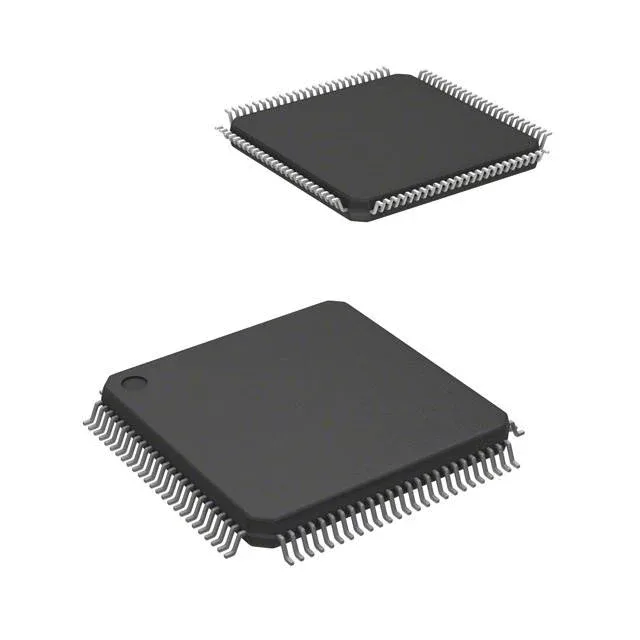
100-pin LQFP — rework and inspection notes
No exposed thermal pad — all heat dissipation goes through the leads and the PCB copper. MSL level is not in the record, but for an LQFP of this era assume MSL 3 unless a bake history is confirmed. The fine pitch (0.5 mm typical for 100-LQFP) needs a good solder paste stencil and a reflow profile with a soak zone to avoid tombstoning. Hand rework with hot air is feasible if the adjacent components are cleared.
Supply voltage and power rail
That 2.5 V nominal rail is tighter than the more common 3.3 V — a separate LDO or a 2.5 V tap from a POL converter is needed.