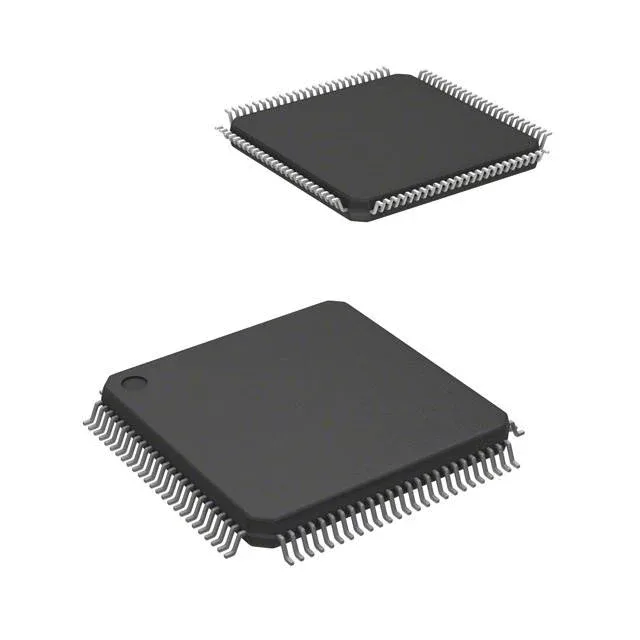
The Texas Instruments LM3S6432-IQC50-A2T is a 32-bit ARM Cortex-M3 MCU from the Stellaris family, running at 50 MHz with 96 KB of Flash and 32 KB of RAM. Its standout feature is the integrated Ethernet MAC — a genuine differentiator in this density class — which lets a control node talk directly on the network without an external SPI-to-Ethernet bridge or a second processor. The -40 to 85 °C temperature range puts it in factory-floor and outdoor telecom cabinets, not just a climate-controlled rack.
At 50 MHz, this Cortex-M3 can service a TCP/IP lightweight stack (like lwIP) alongside a modest control loop without running out of MIPS. The integrated Ethernet MAC offloads the framing and CRC, so the core spends its cycles on application code rather than bit-banging a PHY interface. If your design needs to poll a dozen Modbus TCP connections and update a local display, the 50 MHz budget is adequate; if you are doing real-time FFT or motor FOC at high PWM rates, you will want a faster sibling in the Stellaris range.
Memory sizing for the firmware
96 KB of Flash holds a moderate application plus the bootloader and a network stack image. The 32 KB RAM splits between stack, heap, and Ethernet packet buffers.