What this Stellaris Cortex-M3 brings to the board
It packs 64 KB of program Flash and 16 KB of SRAM, with an integrated 10/100 Ethernet MAC+PHY — a rare find in a mid-density MCU of its generation. The peripheral set includes SPI, SSI, UART/USART, IrDA, and Microwire, plus a PWM unit and brown-out/POR supervisor.
At 25 MHz, this Cortex-M3 delivers roughly 25 DMIPS. That is enough for moderate control loops, TCP/IP stack processing on the internal Ethernet, and command/response protocols over UART or SPI. It is not a high-throughput DSP or a real-time motor-FOC controller — those would want a 100+ MHz sibling.
Memory sizing: 64 KB Flash, 16 KB RAM
The 64 KB program Flash and 16 KB SRAM set a firm ceiling on firmware complexity. A bare-metal TCP/IP stack plus a lightweight RTOS can fit, but a full FreeRTOS+LWIP build with a large application buffer will push against the 16 KB RAM limit. Plan the data buffer sizes and stack depth early in the design. The Flash is adequate for a bootloader, application code, and a small configuration page.
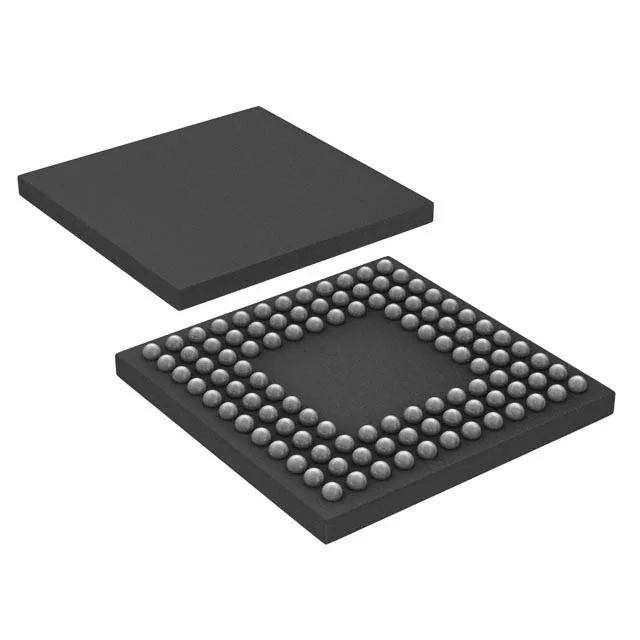
108-ball BGA — footprint and rework considerations
The part comes in a 108-ball LFBGA, 10x10 mm body. Rework demands a hot-air station with a BGA nozzle and a stencil for solder paste. The package is surface-mount only; no socket option exists. If your production line is not set up for BGA assembly, this part will add cost.
The Stellaris line was acquired by TI and later phased out; no direct pin-compatible replacement is offered from TI today. Sourcing is through the independent distribution channel — new-old-stock, surplus, or broker inventory.