The peripheral set covers the essentials: I²C, SPI, SSI, Microwire, and UART/USART for serial communication, plus a 4-channel 10-bit ADC and PWM outputs for analog feedback and timing generation.
50 MHz and 3.0–3.6 V — the supply and speed decision
The 50 MHz core speed is the ceiling for instruction throughput. At that clock, single-cycle multiply and hardware divide keep interrupt latency predictable — useful for a 10 kHz current-control loop or a 115 kbps UART buffer without bit-banging. The supply range of 3.0 V to 3.6 V is standard 3.3 V logic; if the board runs a 3.0 V rail (common in battery-powered gear), the MCU stays within spec all the way down to the low end. No 5 V tolerance on the I/O, so level shifting is needed when interfacing with 5 V legacy peripherals.
Industrial temperature grade — -40 to 105 °C
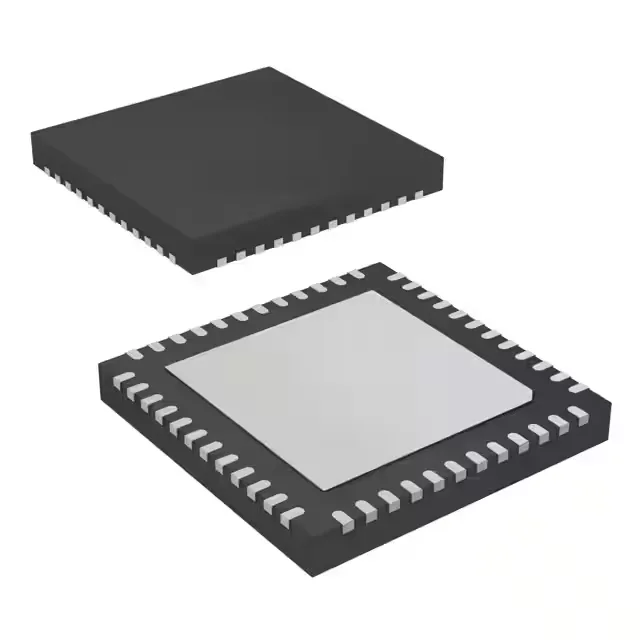
The 48-VFQFN package with exposed pad helps pull heat out of the die when the MCU is running at full clock and driving several I/O pins simultaneously.
Active lifecycle — no LTB headache
There is no last-time-buy clock ticking, no NRND flag.