80 MHz — still enough for a control loop
The LM3S5P31-IBZ80-C5: The 80 MHz core speed on this Cortex-M3 is not a headline number for marketing; it was the throughput that let a single MCU handle a 10 kHz current-control loop, a CANbus message every 500 µs, and a USB HID report all within the interrupt budget. The 67 general-purpose I/O pins and the 16-channel 10-bit ADC gave enough pad for sensor multiplexing without an external mux. If you are searching for a replacement, the 80 MHz clock and the peripheral list — especially CAN and USB — are the binding constraints, not the Flash density.
TI's Stellaris line was folded into the Tiva-C family years ago; the official successor is not pin-compatible, so a board redesign is required. No last-time-buy window remains through the factory channel.
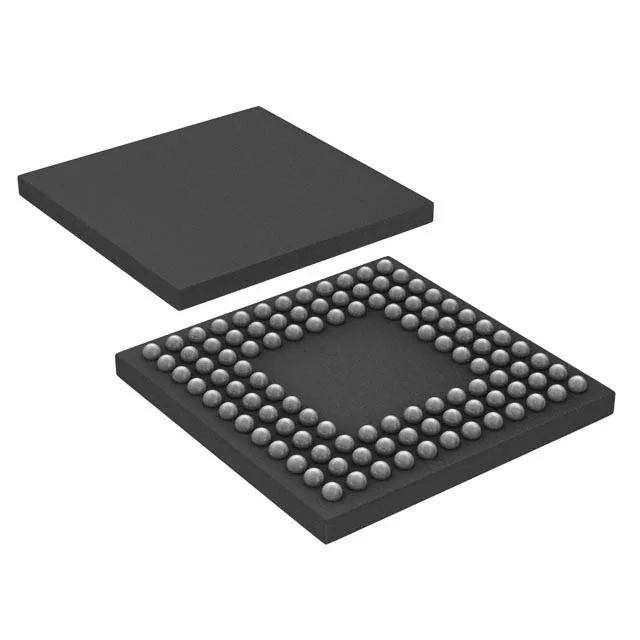
108-ball BGA — footprint reality
The 108-LFBGA (10x10 mm body) is a 0.8 mm pitch ball grid array. The small ball diameter and tight pitch mean the PCB pad design and solder-paste stencil aperture are critical — this is not a package you hand-solder in rework without a proper stencil and reflow profile. The supply voltage is a narrow 1.08 V to 1.32 V core rail, so the board needs a clean 1.2 V regulator close to the BGA. If you are evaluating this part for a repair or a legacy BOM, verify that your board's decoupling and via pattern match the original layout — a drop-in swap from a different BGA footprint will fail.