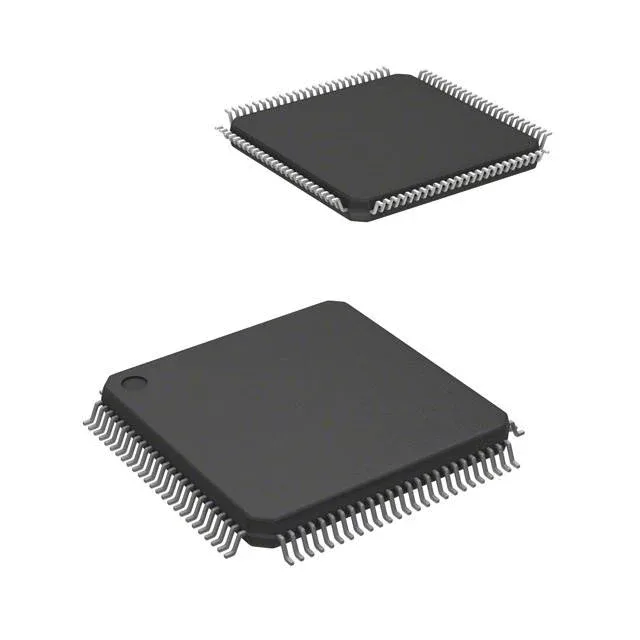
80 MHz Cortex-M3 with USB OTG and CAN — what this part was designed for
The LM3S5K31-IQC80-C5: It integrates a rich peripheral set including USB OTG, CAN 2.0B, multiple UART/USART, SPI, I²C, and a 16-channel 10-bit ADC, making it suited for industrial control, motor drive, and automotive gateway applications that need a single-chip control and connectivity solution.
This means TI no longer manufactures the part, and no last-time-buy window remains open. There is no official TI-recommended replacement listed for this specific variant; the Stellaris family was migrated to the Tiva C Series platform, but pin-compatibility and software migration require careful evaluation of the specific target part. If you are qualifying this MCU into a new design today, the obsolete status is a hard stop — you need to select a current-production alternative.
Connectivity and peripherals — what the chip brings to the board
The LM3S5K31 integrates a USB On-The-Go (OTG) controller with PHY, a CAN 2.0B controller, and multiple serial interfaces: UART/USART, I²C, SPI, SSI, and Microwire. It also includes a quadrature encoder interface (QEI) for motor position feedback, an IrDA module, and a LIN bus controller. The 16-channel 10-bit ADC samples at up to 1 Msps. For PWM generation, there is a dedicated PWM module plus a watchdog timer and a brown-out reset circuit. The DMA controller offloads peripheral-to-memory transfers without CPU intervention. This peripheral mix targets applications that need both human-interface connectivity (USB) and industrial fieldbus (CAN, LIN) on a single chip.
100-LQFP package — footprint and layout notes
The 100-LQFP package is 14 mm × 14 mm with 67 GPIOs and a 1.08 V–1.32 V core supply.