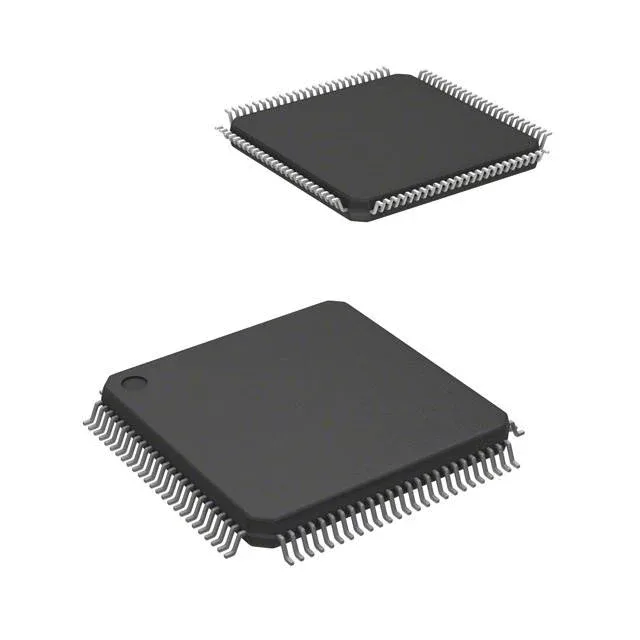
80 MHz Cortex-M3 with 384 KB Flash — what it was built for
The LM3S5G31-IQC80-A1T: It was designed for industrial control, motor-drive, and gateway applications where the rich peripheral set — CAN, EBI/EMI, I²C, SPI, SSI, UART, IrDA, LIN, and QEI — handles multiple protocol domains without external bridge chips. The 16-channel 12-bit ADC and the DMA controller offload the core for deterministic data movement.
For a production BOM that still calls out this exact code, the only channel is surplus or broker inventory — new-old-stock, pulled reels, or customer-return lots. The MSL rating and date-code freshness matter more here than for an active part, because older inventory may have sat past the floor-life window. Bake before reflow if the reel's moisture-barrier bag has been opened.
Memory map and peripheral fit
The Flash is 384 KB and the SRAM is 64 KB. The EBI/EMI interface can connect external memory for data-logging or display buffers.
Sourcing reality for an obsolete part
Because this MCU is obsolete, the usual franchised-distributor channel will not carry it. Sourcing goes through independent distributors who hold end-of-life inventory, customer excess, or broker-sourced reels. The price and availability fluctuate with remaining stock — expect a premium over the original list price, especially for full reels with consistent date codes. Counterfeit risk is elevated for high-volume MCUs in this lifecycle stage; a visual inspection and electrical verification (blank-check the Flash, exercise the JTAG/SWD port) should be part of the incoming QC for any lot. If the BOM can tolerate a board spin, migrating to a current-production Cortex-M4 or -M0+ part with similar peripheral mapping is the lower-risk long-term path.