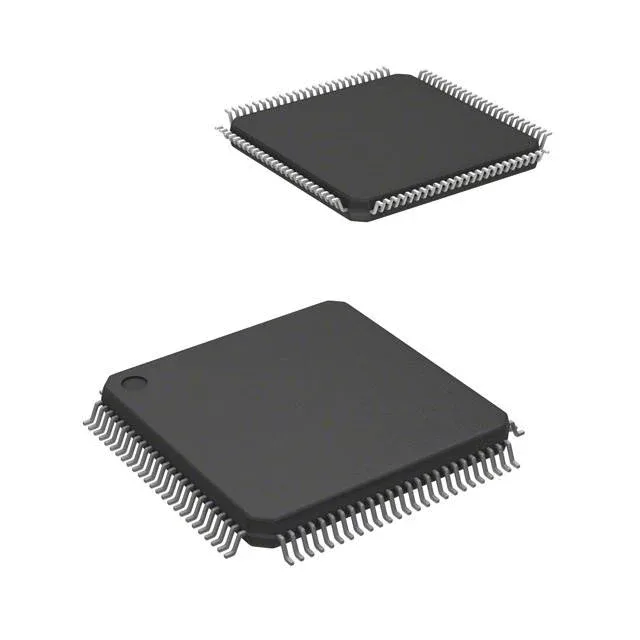
Texas Instruments LM3S5B91-IQC80-C1T — Microcontrollers & Processors (MCU / MPU / DSP)

LM3S5B91-IQC80-C1T Stellaris ARM Cortex-M3 MCU, 80MHz

MPNLM3S5B91-IQC80-C1T
Obsolete

Texas Instruments Stellaris® ARM® Cortex®-M3S 5000 series LM3S5B91-IQC80-C1T, 32-bit MCU, 80MHz, 256KB Flash, 96KB SRAM, 72 I/O, USB OTG, CAN, 100-LQFP, -40°C to 85°C.

Independent supplier — new & surplus stockAuthenticity-screened · ESD-safe packingListing updated Jul 2026

Specifications

LM3S5B91-IQC80-C1T specifications
ParameterValue
SeriesStellaris® ARM® Cortex®-M3S 5000
MountingSurface Mount
Oscillator typeInternal
Program memory typeFLASH
Voltage - supply (Vcc (Vdd))1.08V ~ 1.32V
Operating temperature-40°C~85°C(TA)
Speed80MHz
PackageTape & Reel (TR)
RAM size96K x 8
Core size32-Bit Single-Core
PeripheralsBrown-out Detect/Reset, DMA, I²S, POR, PWM, WDT
ConnectivityCANbus, EBI/EMI, I²C, IrDA, LINbus, Microwire, QEI, SPI, SSI, UART/USART, USB OTG
Number of i (O)72
Core processorARM® Cortex®-M3
Case100-LQFP
Data convertersA/D 16x10b
Program memory size256KB (256K x 8)

Product details

This part carries an official lifecycle status of Obsolete. Date-code provenance matters here: stock that surfaces long after the EOL date should be verified for authenticity and moisture sensitivity (MSL) handling.

Package and footprint — 100-LQFP

Surface-mount only. The exposed paddle is not present on this package variant, so thermal management relies on the leadframe and airflow. For a rework technician: the 0.5 mm pitch calls for a fine-pitch soldering iron tip or a hot-air profile that avoids skewing adjacent leads. No BGA reball concerns here — this is a straightforward QFP rework.

Frequently asked questions

Is LM3S5B91-IQC80-C1T obsolete?

Yes, this part is officially listed as Obsolete. Texas Instruments has discontinued production, and no last-time-buy window is currently open through the factory channel.

Can LM3S5B91-IQC80-C1T be used in new designs?

Not recommended. With an Obsolete lifecycle status, there is no guarantee of future supply. New designs should target an active, factory-supported MCU to avoid a supply-driven redesign later.