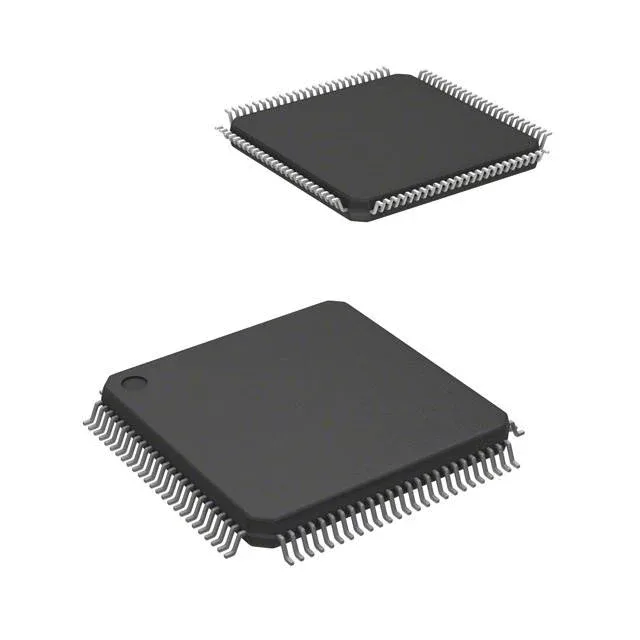
Stellaris Cortex-M3 with USB OTG and CAN — what you get
The 16-channel 10-bit ADC and PWM timers suit motor control and sensor acquisition in industrial or automotive environments.
80 MHz core with 96 KB RAM — headroom for control loops
The 80 MHz Cortex-M3 delivers around 1.25 DMIPS/MHz, enough for real-time control loops running field-oriented motor control or CANopen stacks. The 96 KB SRAM leaves room for multiple frame buffers and a modest RTOS heap; a firmware engineer can budget about 40 KB for application data after allocating 20 KB for comms stacks and 16 KB for DMA descriptors.
No direct pin-compatible drop-in from TI exists under the same base number — the Stellaris line was folded into the Tiva C series, but the packages and peripheral maps differ.
100-LQFP — footprint and rework notes
MSL 3 out of the bag — if the moisture barrier bag has been open longer than the floor-life window, bake at 125°C for 24 hours before reflow. The exposed paddle under the package is not present on LQFP; thermal dissipation relies on the leadframe and copper pours on the top layer.