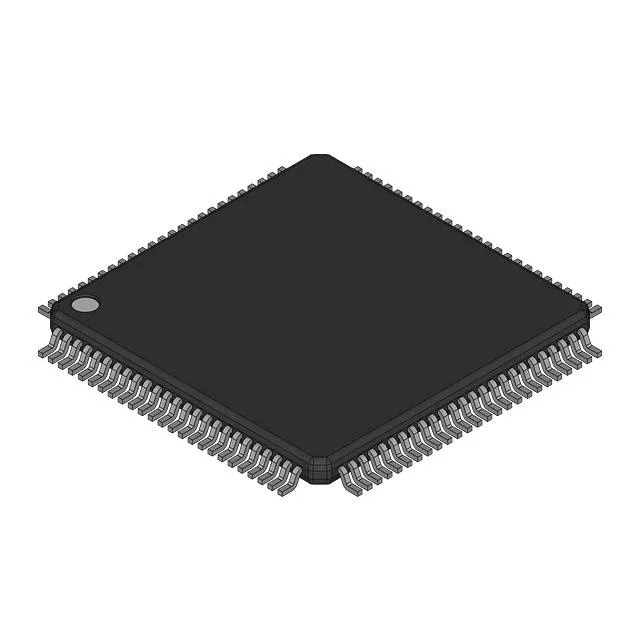
Texas Instruments LM3S5749-IQC50 — Microcontrollers & Processors (MCU / MPU / DSP)

TI LM3S5749-IQC50 Stellaris ARM Cortex-M3 MCU, 50 MHz

MPNLM3S5749-IQC50
Active

Texas Instruments LM3S5749-IQC50, Stellaris ARM Cortex-M3S 100 series, 32-bit ARM Cortex-M3 MCU at 50 MHz, 128KB Flash, 64KB SRAM, USB/CAN/I2C/SPI/UART, 100-LQFP, -40 to 85°C, 2.25-2.5V.

Independent supplier — new & surplus stockAuthenticity-screened · ESD-safe packingListing updated Aug 2026

Specifications

LM3S5749-IQC50 specifications
ParameterValue
SeriesStellaris® ARM® Cortex®-M3S 100
MountingSurface Mount
Oscillator typeInternal
Program memory typeFLASH
Voltage - supply (Vcc (Vdd))2.25V ~ 2.5V
Operating temperature-40°C~85°C(TA)
Speed50MHz
PackageBulk
RAM size64K x 8
Core size32-Bit Single-Core
PeripheralsBrown-out Detect/Reset, DMA, POR, PWM, WDT
ConnectivityCANbus, I²C, IrDA, Microwire, QEI, SPI, SSI, UART/USART, USB
Number of i (O)61
Core processorARM® Cortex®-M3
Case100-LQFP
Data convertersA/D 8x10b
Program memory size128KB (128K x 8)

Product details

50 MHz ARM Cortex-M3 with USB and CAN on a 100-LQFP

Memory headroom and peripheral fit

The Flash is sized for a moderate firmware image — think a CANopen stack plus a USB CDC class driver and a few application tasks — while the 64 KB SRAM gives enough buffer space for packet handling without tight manual memory management. The 61 GPIOs in the 100-LQFP leave room for a parallel LCD or a keypad matrix alongside the serial interfaces. The connectivity list includes USB, CAN, I²C, SPI, SSI, and UART.

The core and I/O operate from a 2.25 V to 2.5 V supply. The internal oscillator keeps the clock running without an external crystal.

Frequently asked questions

Does LM3S5749-IQC50 have USB and CAN interfaces?

Yes. The connectivity block includes CANbus, USB, I²C, IrDA, Microwire, QEI, SPI, SSI, and UART/USART.

What is the closest pin-compatible alternative to LM3S5749-IQC50?

Pin-compatible alternatives exist within the Stellaris ARM Cortex-M3S 100 series, sharing the same 100-LQFP footprint and supply voltage. The deciding factor between variants is typically the Flash and SRAM density — this part sits at 128 KB Flash / 64 KB SRAM, while higher-density siblings offer up to 256 KB Flash. Review the memory and peripheral set of the target alternative before swapping.