Core and memory — what the 20 MHz and 16 KB mean for your firmware
The LM3S301-EGZ20-C2T: That speed, combined with the single-cycle multiply and hardware divide of the Cortex-M3 core, handles control loops and protocol parsing without a software bit-bang penalty — the Thumb-2 instruction set keeps code density tight for the 16 KB flash footprint. On-chip memory is 16 KB flash and 2 KB SRAM. The 2 KB SRAM limits data buffering — for a UART receive ring buffer at 115200 baud, you have roughly 170 ms of headroom before overflow. Plan to move data out to external SPI flash or a host controller if your application streams more than a few hundred bytes per transaction.
Peripherals and connectivity — what is on the die
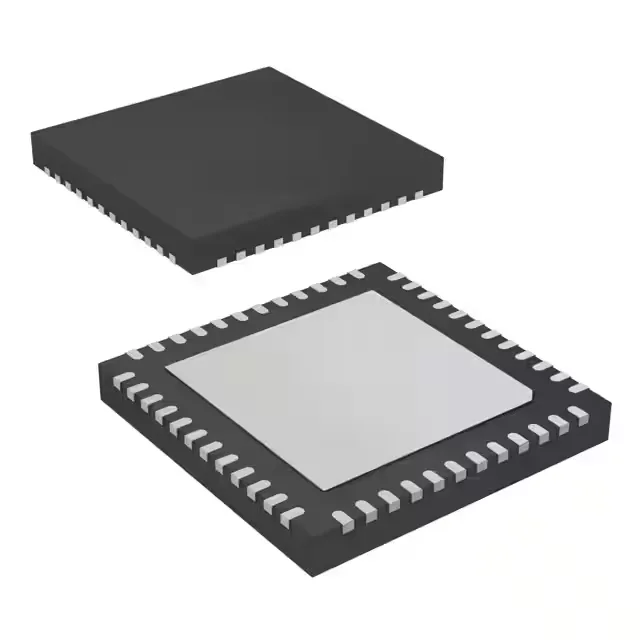
The part integrates a 10-bit ADC with three channels, a PWM module, a watchdog timer, and brown-out detect/POR reset. For serial communication, it supports Microwire, SPI, SSI, and UART/USART — enough to talk to a sensor hub, a small display, or a host controller over a single UART link. 33 general-purpose I/O pins are available in the 48-VFQFN package.
Supply voltage and temperature grade
The industrial temperature range (-40 to 105 °C) qualifies the device for outdoor telecom, motor-drive enclosures, and under-hood automotive auxiliary modules (non-AEC-Q, but the temperature band overlaps many harsh-environment applications).