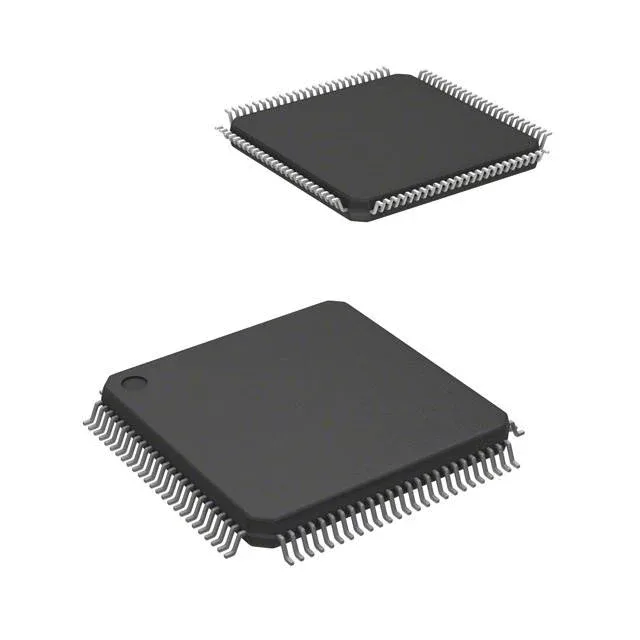
50MHz Cortex-M3 with 256KB Flash — what it means for the BOM
The LM3S2939-IQC50-A2T: That puts it in the sweet spot for control applications that need more than a basic 8-bit part but don't require the overhead of a full MPU. On-chip memory is 256 KB of flash and 64K x 8 of RAM. For a typical firmware image with a small RTOS and a CAN stack, that leaves comfortable headroom for the application layer — you won't be squeezing code into the last sector. The 57 GPIOs and peripheral set — CAN, I²C, SPI, UART, plus a QEI for motor feedback — cover a lot of industrial control and sensor-fusion scenarios without needing external glue logic.
NRND — what that means for procurement
Texas Instruments lists this part as NRND (Not Recommended for New Designs). That means it's still available for existing production, but don't spin a new board around it — the long-term supply window is closing. For a field repair or a BOM that's already qualified, the NRND status isn't a showstopper: the part is still orderable through distribution. But if you're doing a redesign, look at TI's current Cortex-M4 or M7 families for a pin-compatible migration path — the package and supply voltage are your main constraints.
Package and supply — board-fit checklist
That's a standard footprint — most assembly houses handle it without a premium. The internal oscillator means you can skip an external crystal for many applications, saving two pins and a bit of board space.